

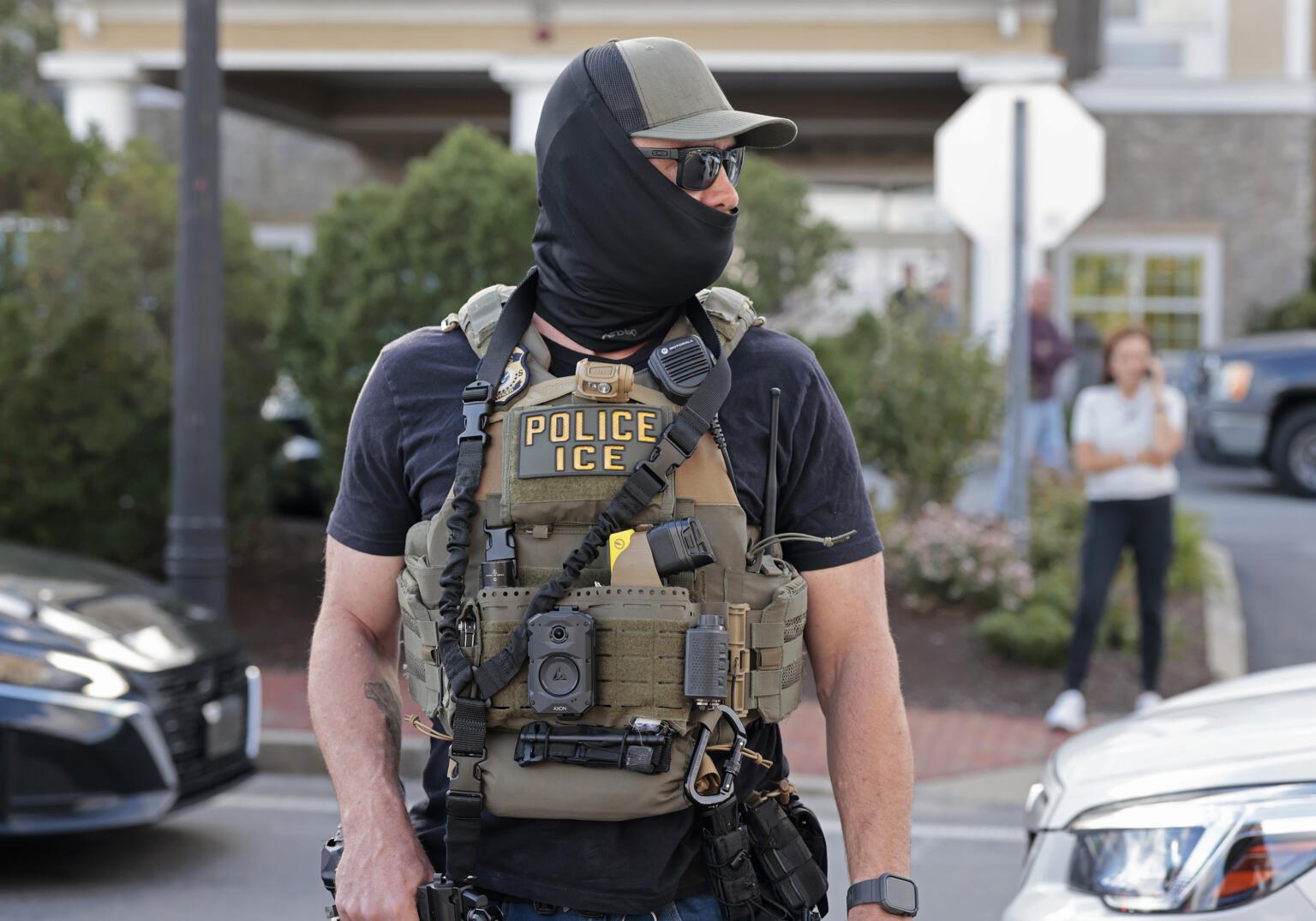
The post-Immigration and Customs Enforcement (ICE) quiet in working-class neighborhoods and coastal industrial docks in New Bedford, Massachusetts, has a very heavy weight. There’s a real, human element to every enforcement action beyond the numbers and agency press releases: an enforcement action changes the fabric of work, education, local commerce and civic trust overnight.
Whispers on the Factory Floor
Changes begin with empty stations at seafood processing plants and textile factories, which are responsible for the local maritime economy. ‘‘This is because, says Mateo, the ‘people are just afraid to punch in.” It’s not only those without papers who stay home—it’s anyone whose cousin, spouse, neighbor or someone they know is affected who will not be going to work. Production slows, existing employees will be working twice as hard and anyone who has an unfamiliar car in the parking lot will be in for a fright.’’
Local business owners are now suffering immediate disruptions of their supply chains, and a shortage of labor. But some small grocery store owners along Acushnet Avenue say they have seen a significant decline in some daily customer numbers. Residents’ restrictions on movement negatively impact small businesses that rely on regular neighborhood traffic. Small businesses that rely on regular neighborhood traffic are directly affected by residents’ restrictions on movement.
Empty Desks and Anxious Classrooms
School attendance at local elementary and middle schools is a sign of the community’s apprehension. Parents opt to not send kids to school when it’s time to pick them up or drop them off in the morning or afternoon. Maria Santos, a parent volunteer and mother of two, says the inside of homes: “Children pick up on the anxiety; they ask themselves, will their parents be home when I come home from school? Teachers are doing their best to provide stability, but when half a classroom is missing or half a class is trying to learn while working on their emotional survival, learning takes a back seat. School administrators and school counselors have stepped up their outreach and communications with families, assuring them that schools will continue to be safe havens, but it takes time to begin to restore trust.
Faith Institutions and Legal Frontlines
Houses of worship are now emergency shelters for families to turn to for counsel, sustenance and legal services. Those in the pews have to be crisis managers taking the lead in running know your rights events and gathering essential household materials for adults who have been arrested and are unable to work. Pastor David Gomez points out that “our ministry is not just on Sundays. “Loss of the primary breadwinner in the family requires shelter, food and clarity around legal information in the short-term and we are assisting individuals in navigating a legal system that is daunting and distant.”
Area immigration attorneys are handling lots of emergency motions and assisting families in obtaining guardianship of their minors. ‘‘Local immigration attorney Elena Reyes says that the “hardest conversations” are about emergency plans. We recommend parents to establish a power of attorney for their children in case of separation and to take control of the bank accounts in case of separation. It is a sobering step and no family should have to take it.’’
Municipal Challenges and Civic Trust
Municipal officials face the challenge of maintaining public safety while keeping communities stable. City leaders point out that key services, such as emergency medical and fire protection, and local police services are available to all residents—regardless of status. But, it takes time and persistence to rebuild that trust. As people avoid routine care out of fear of seeking treatment, local health workers report that people are not attending appointments or seeking treatment on time.
New Bedford’s history is one of resilience and that resilience was built by generations of immigrants who have contributed to New Bedford’s maritime heritage. The immediate effects of the enforcement actions ripple throughout the area of the city where they occur and the local community groups, schools, and neighbors are still striving to return to normal.

Dr. Brian Omolo is an author and professional advisor dedicated to raising the voices of the different communities of New England. He is a PhD holder in Literature from Kenyatta University and a bachelor's degree holder in Pure Mathematics from the University of Nairobi, which justifies his combination of analytical clarity and creative insight.