

The experience of Haitian migrants interacting with the United States immigration system cannot be fully understood without examining the long shadow of anti-Blackness and nativist policy that has shaped U.S. public policy for centuries, argues scholar Willie Mack in a commentary for Harvard Kennedy School’s Carr-Ryan Center for Human Rights Policy.
The U.S. government’s treatment of Haitian migrants from border processing to Temporary Protected Status (TPS) reflects racialized assumptions about who belongs, who is “deserving,” and who is a threat. This context underlies many recent policy shifts and community fears here in Massachusetts and across the nation.
A History Rooted in Anti-Black Nativism
According to Mack’s analysis, the marginalization of Haitians in U.S. immigration policy is not isolated to recent decades. Still, it is part of a long history of anti-Black nativist state practices. He links today’s restrictive measures to deep-seated patterns of racial exclusion that have shaped immigration laws and enforcement for generations.
In this framing, anti-Blackness isn’t an incidental byproduct—it is a structural force that influences how policies are crafted and implemented, often to the detriment of Black migrants such as Haitians.
Travel Bans and Local Community Impact
In June 2025, a new U.S. travel ban came into effect, restricting entry from more than a dozen countries, including Haiti. Local Haitian leaders in Boston described the policy as isolating and damaging, with profound implications for families, community organizations, and transnational ties. Marvin Mathelier, executive director of the Toussaint L’Ouverture Cultural Center, said, “The message that we are seeing is that the U.S. does not stand with Haiti… We’re isolating them… and it’s unfair.”
Boston’s Haitian community is the third largest in the United States, so these federal actions resonate deeply across the Commonwealth.
The TPS Debate: Legal Status, Fear, and Rights
Temporary Protected Status (TPS) has long offered a precarious form of legal stability to Haitian immigrants, first granted after the catastrophic 2010 earthquake. In 2025, the Trump administration moved to end TPS for Haitian nationals, asserting that conditions in Haiti had improved enough to justify termination despite ongoing violence and instability.
Critics called this decision dangerous and discriminatory, saying it “will only put them in danger, tear families apart, and damage our economy.”
A federal judge later blocked an attempt to terminate TPS early, noting that many beneficiaries had made life decisions, such as pursuing education or employment, based on the duration of their TPS status.
This legal tussle illustrates how shifting policy decisions can abruptly upend lives, particularly for Black migrant communities already grappling with historical marginalization.
Border Narratives and Racialized Enforcement
Across U.S. border enforcement and interior immigration actions, Haitian migrants have often been cast in frames that link their presence to “criminal networks” or national security concerns. These narratives shape public perception and policy responses, even when they lack a strong evidentiary basis.
In framing Haitian migration through the lens of security threats rather than human rights or humanitarian need, critics argue the U.S. leans on racialized stereotypes and exclusionary logic. This trend parallels broader anti-Black and xenophobic attitudes within immigrant policy debates.
Community Response and Resistance
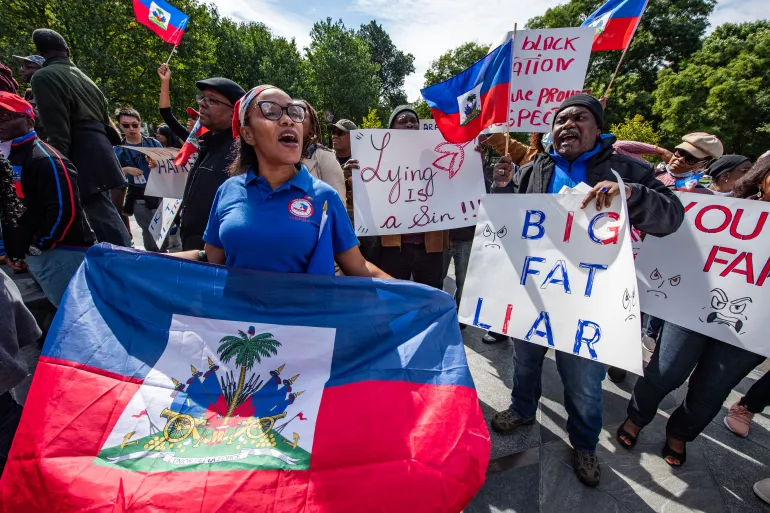
In Boston and beyond, Haitian communities and advocacy organizations are actively contesting these policies and their impacts. Across protests, legal challenges, and advocacy campaigns, Haitians and allies are pushing back against what they see as unjust and racially discriminatory immigration measures.
Local legal support initiatives and public officials have called for resources to help immigrants navigate these complex legal landscapes, further highlighting the intersection of policy, race, and community resilience.
Structural Barriers, Continued Organizing
Understanding why Haitian migrants face unique barriers in U.S. immigration policy requires situating those barriers within historical, racial, and political contexts. As Willie Mack’s Carr-Ryan commentary argues, these are not accidents of policy but the product of a system shaped by anti-Black nativism that continues to influence border management, legal status decisions, and public discourse.
For the Haitian community in Boston and across the U.S., the response is not passive acceptance but organized resistance, legal advocacy, and cultural resilience, a powerful reminder that immigration policy impacts real human lives.

Abdullahi Hussein is a community journalist focused on uplifting immigrant voices and local stories in Boston. He is also our director of editorial and development.