

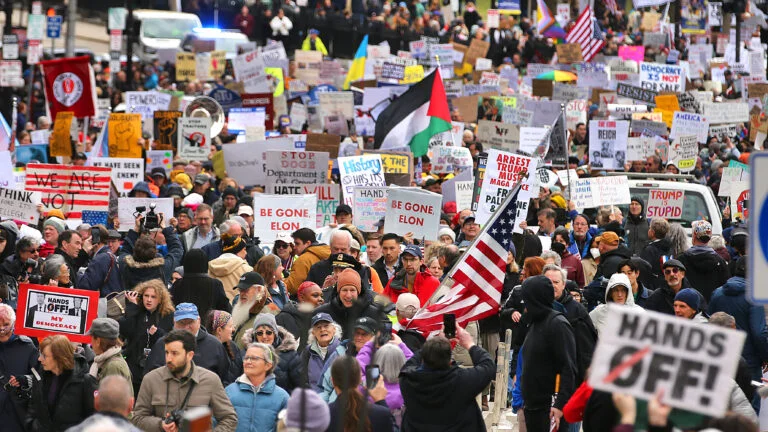
Immigrants have long shaped Boston, yet its history also carries moments when fear, suspicion, and exclusion defined how newcomers were treated. While today’s debates around immigration often feel unprecedented, the city’s past tells a different story, one that reveals repeating patterns and essential lessons for the present.
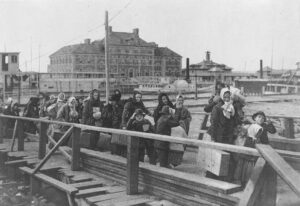
In the late 19th and early 20th centuries, Boston experienced large waves of immigration from Ireland, Italy, Eastern Europe, and later from the Caribbean and Latin America. These communities were essential to the city’s growth, providing factory workers, building infrastructure, and sustaining neighborhoods. Historical research documented by PBS’s American Experience shows that immigrants were often scapegoated during periods of social anxiety, blamed for crime and unrest regardless of evidence, and subjected to heightened surveillance and discrimination.
Fear-Based Narratives and Their Lasting Impact
Policies shaped by fear rather than fact left lasting scars of deep mistrust, economic marginalization, and social isolation. Many neighborhoods that today serve as cultural and economic anchors were once viewed through a lens of suspicion. Global Boston’s documentation of immigrant places highlights how immigrant-founded institutions, markets, places of worship, cultural centers, and social organizations emerged as survival mechanisms in response to exclusion.
These places were not merely cultural symbols; they became essential infrastructure for communities denied equitable access to public systems.
Modern Echoes of Old Patterns
Fast forward to today, and the language may be more coded, but the dynamics remain familiar. Immigrant communities in Boston, particularly Black, Muslim, Latino, and undocumented populations, continue to navigate fear-driven narratives. Federal immigration crackdowns, misinformation, and politicized rhetoric have revived anxieties that affect daily life: parents hesitant to attend school meetings, workers avoiding healthcare, and families fearful of public spaces.
According to the City of Boston’s Office for Immigrant Advancement, immigrants account for nearly one-third of the city’s population and are deeply embedded across every neighborhood and sector.
Yet despite these realities, fear continues to shape how many residents interact with public institutions.
Statewide data from the American Immigration Council further illustrates that immigrant communities are not isolated to Boston alone but are integral to cities and towns across Massachusetts.
Evidence Tells a Different Story
What has changed is the availability of precise, accessible data. Reports from The Boston Foundation’s Global Greater Boston initiative show that immigrants are essential to regional economic growth, small business creation, workforce stability, and population sustainability.
Rather than being a strain on public systems, immigrants sustain key industries from healthcare and food services to education and construction while strengthening Boston’s position as a global city.
Additional analysis from Stacker underscores Boston’s deep international connections, identifying the largest source countries for immigration and demonstrating how global migration patterns directly shape local culture, commerce, and neighborhood life.
Lessons from History and a Choice for the Future
History shows that moments of exclusion are often followed by periods of recognition and reform. Irish and Italian immigrants, once labeled dangerous outsiders, eventually became central to Boston’s political, cultural, and civic leadership. That transformation did not happen automatically; it required advocacy, policy changes, and a willingness to confront fear with facts.
The lesson for Boston today is not simply to acknowledge past injustices but to actively prevent their repetition. When immigration policies and public narratives are driven by fear, the consequences ripple across generations. When they are guided by evidence and inclusion, they strengthen public trust, safety, and cohesion.
Boston’s identity has always been global. Its resilience has always depended on newcomers. Remembering the city’s history of exclusion is not about dwelling on shame; it is about choosing a different path forward. At a time when immigration is once again framed as a threat, Boston’s own history offers a clear reminder: fear fades, but immigrants’ contributions endure.
As Boston and Massachusetts continue to navigate debates over immigration enforcement, public safety, housing, and access to services, the choices policymakers make carry long-term consequences. History shows that policies rooted in fear deepen division and weaken trust, while those grounded in evidence and inclusion strengthen communities and institutions alike. At a moment when immigration is again being used as a political fault line, Boston’s past offers a clear directive: protecting immigrant dignity is not only a moral obligation but also a practical investment in the city’s social stability, economic vitality, and shared future.

Abdullahi Hussein is a community journalist focused on uplifting immigrant voices and local stories in Boston. He is also our director of editorial and development.