


President Donald Trump’s recent remarks, labeling Somalis in Minnesota as “garbage,” represents a calculated element in broader rhetoric. His strategy of dehumanization targeting Black and Brown communities lays out the groundwork for exclusionary policies that directly exacerbate public health inequities.
While not new, this pattern of racist and xenophobic rhetoric frames non-white newcomers as active threats to public health and security. Just last year, a comedian speaking at a Trump rally called Puerto Rico a “floating island of garbage”, effectively dehumanizing its largely Brown population. Or consider when Trump falsely claimed Haitian migrants in Springfield, Ohio, were “eating cats and dogs,” painting Black migrants as predatory, and unsafe to [White] communities. These comments deliberately portray Black and Brown people as invasive, primitive, dangerous, and discardable, while implying that the only refugees worthy of state protection are White.
For the Somali community in Minnesota, this rhetoric is painfully familiar. As a Somali-American researcher from Minnesota, I’ve documented how these narratives—including Trump’s previous attacks on the Somali community during campaign stops in 2016 and 2019–translate into real harm in localities. Decades of being framed as security threats, [particularly from the disastrous FBI informant programs targeting Somali youth during the Obama administration] have bred deep-seated distrust both directed at fellow members of the community and in institutions. My own step-dad was murdered in 2008 in Minnesota by two white men in what the state labeled a bias crime, motivated by his Somali ethnicity. When political leaders remark and amplify these stereotypes, they validate violence rooted in discrimination and fuel exclusionary policies.
The consequences of racist rhetoric become manifested in health and objective social outcomes. Over the past few years, migrant-led organizations (MLOs), which provide a significant share of health and human services to immigrants and refugees, have operated in environments of fear, suspicion, and distrust. Trump’s “garbage” rhetoric and portrayal of the entire Somali community as fraudsters will only intensify that scrutiny, inviting more surveillance and undermining the legitimacy of MLOs in competently delivering services to those most in need. This has important implications for public health. These organizations are crucial in delivering culturally-competent social and health services to communities that mainstream systems often cannot. When they are defunded or delegitimized, health disparities widen. Mental and physical health conditions go untreated, while trust in care systems erodes. MLOs in Minnesota were instrumental in helping contain the measles outbreak in 2017, and again in 2020 to combat Covid-19 vaccine hesitancy. Perpetuating health and social inequities in migrant communities means that communities at-large suffer from these consequences.
We cannot ignore the racist tropes President Trump relies on when discussing migration policies. Historically, U.S. migrant policies have privileged white groups while excluding refugees from the Global South. The demonization of Somali, Haitian, and Latine migrants stands in sharp contrast to the political welcome routinely extended to white refugees. This double standard is built on a foundation of anti-Blackness and xenophobia.
When you label a community “garbage”, it becomes easier to justify surveilling, detaining, and withholding services from them, and, importantly, it absolves governments from the responsibility of investing in their wellbeing. We have seen this before in the neglect of Puerto Ricans after Maria, and in the inhumane treatment of Haitian asylum seekers at the southern border, for examples.
If we truly want to commit to health equity, we must recognize racist rhetoric as a public health threat. Words that dehumanize lead to policies that exclude, and exclusion often kills. It denies people the ultimate protection of the state.
Migrants and refugees have survived unimaginable trauma and loss and have shown incredible resilience. During my field work in the Twin Cities and beyond, I spoke with hundreds of Somali migrants, who beyond contributing immensely to their communities, still had bullets lodged in their bodies, or who have witnessed militiamen storm their homes, executing their children right before them. Things many of us fortunately will never experience. Despite adverse experiences both before and after resettlement, they display unwavering gratitude and gratefulness for America. Our collective consciousness requires us to recognize that when one community is targeted with hate, the health of our entire nation suffers.

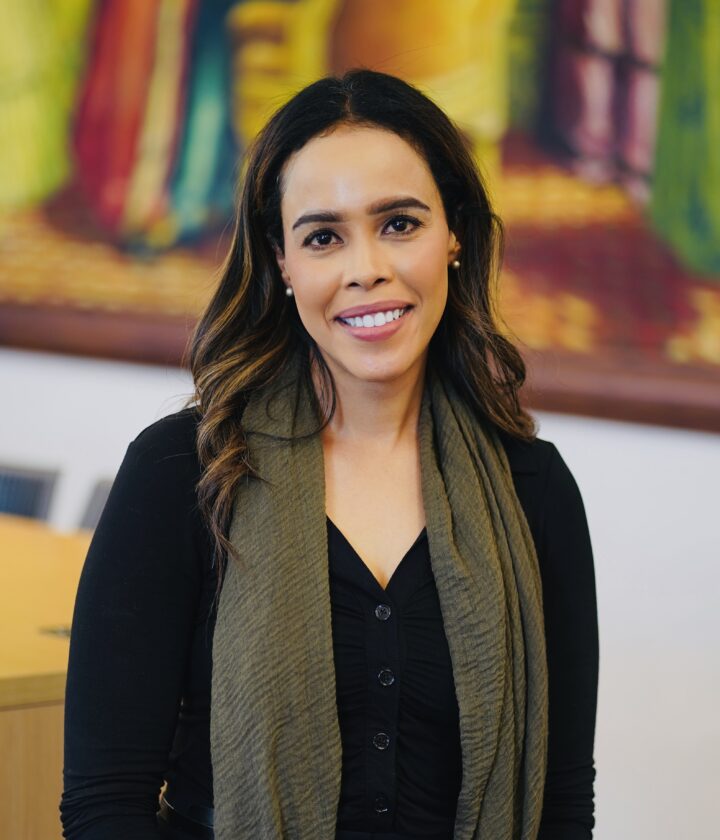
Dr. Muna Saleh
Dr. Muna Saleh is an assistant professor at Ohio State University and was raised in Rochester, Minnesota. Her research focuses on refugee health and resettlement, especially within the Somali diaspora in the U.S. She studies how community environments and resettlement experiences shape health outcomes, with an emphasis on improving care for refugees living with chronic illnesses. Dr. Saleh earned her PhD in Social Work from Virginia Commonwealth University in 2025.