

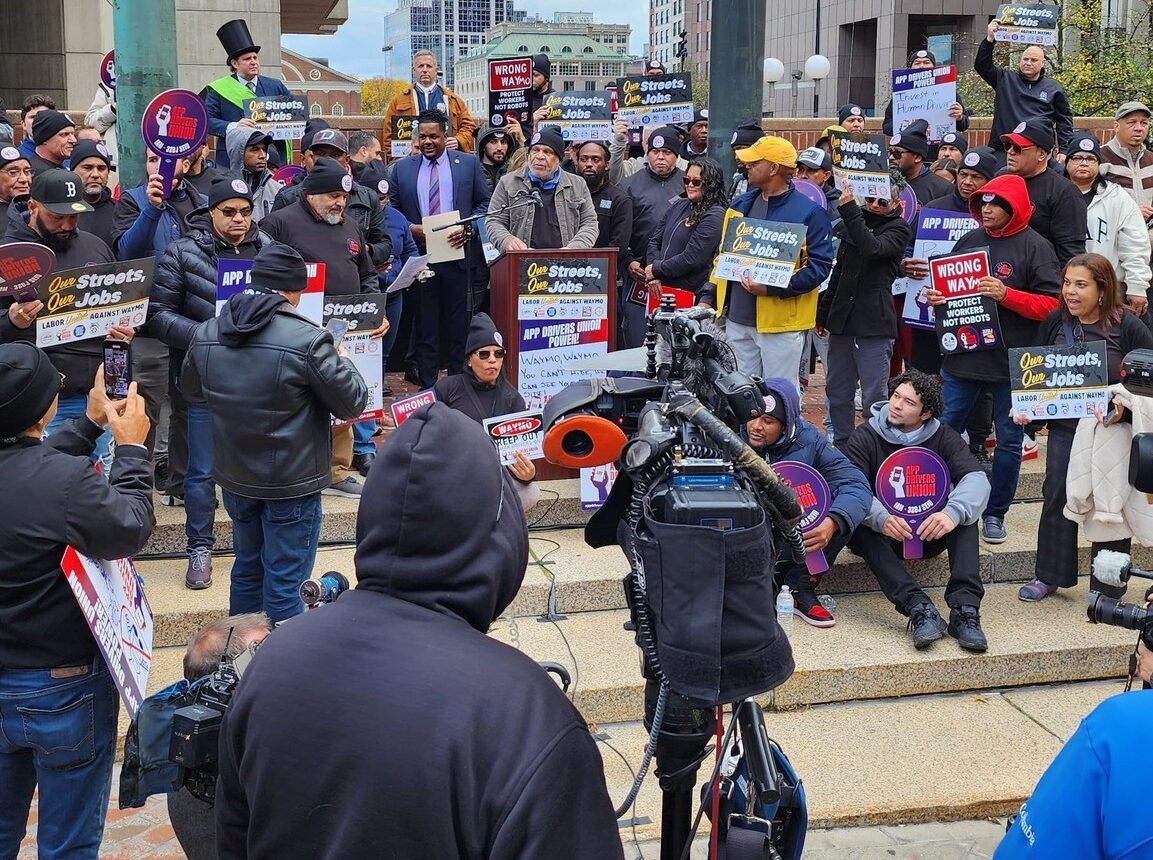
Massachusetts has formally recognized the App Drivers Union, marking a significant shift in labor rights for thousands of rideshare drivers across the state, many of whom are immigrants and people of color.
A notice issued by the Department of Labor Relations (DLR) confirmed that the App Drivers Union met the legal requirement to represent at least 5 percent of active rideshare drivers, granting it standing to begin collective bargaining with transportation network companies.
The recognition now allows negotiations on wages, working conditions, and safeguards against sudden, unexplained deactivations, longstanding concerns among drivers.
“This law will help drivers get the wages they deserve and stop baseless deactivations,” said Ehab Hilal, App Drivers Union organizer. “These are major injustices drivers have faced with rideshare companies for years.”
A Workforce Shaped by Immigration
An estimated 50 percent of rideshare drivers are foreign-born, 30 percent are U.S.-born people of color, and 20 percent are white, U.S.-born, according to analysis of data from the Pew Research Center, the National Equity Atlas, and comparable state labor studies.
Many immigrant drivers come from Africa, the Caribbean, Latin America, the Middle East, and South Asia, and rely on app-based driving as their primary source of income in a high-cost state. Advocates say this reality makes labor protections especially critical, particularly as drivers report wage instability and sudden account deactivations with little transparency.
State labor officials emphasized that the union’s recognition is in accordance with existing law that guarantees rideshare drivers the right to organize and bargain collectively. Massachusetts now joins a small but growing number of states taking concrete steps to regulate labor conditions in the rapidly expanding gig economy.
From Regulation to Representation
Massachusetts treats rideshare companies like Uber and Lyft as Transportation Network Companies (TNCs) under state law, requiring them to obtain permits, maintain insurance, and ensure drivers meet background check and safety standards before operating. These regulations form the foundation of statewide oversight of app-based transportation services and were initially enacted in 2016, with administration through the Department of Public Utilities’ TNC Division.
The recent recognition of the App Drivers Union builds on this framework, adding a new layer of labor rights and collective bargaining for drivers who have long operated within this regulated environment.
For drivers, the announcement represents more than a legal change; it signals a shift toward accountability and a stronger voice in an industry that has rapidly reshaped transportation across the Commonwealth.

Said Abdikarim is a visionary business and nonprofit leader with more than a decade of experience in strategic communications, public policy, and civic engagement. His work spans nonprofit, educational, and public-sector organizations, where he has led high-impact initiatives focused on narrative strategy, complex project management, and meaningful engagement with diverse communities and stakeholders.