


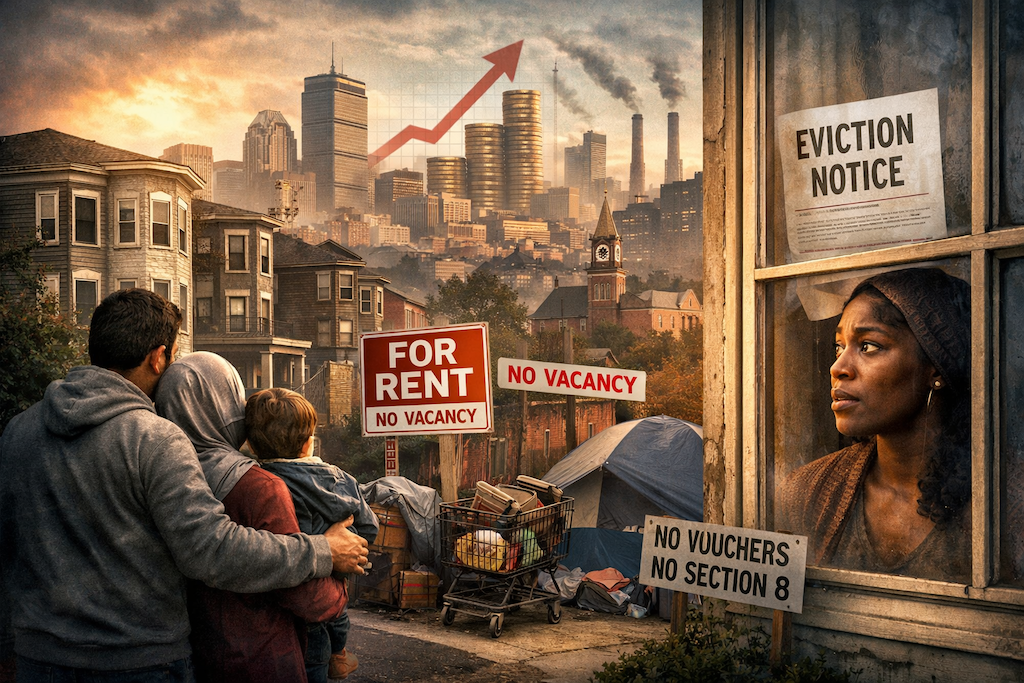
The housing affordability crisis is on the verge of breaking in the major cities of New England, with immigrants and people of color being the ones enduring increased rents, low housing supply, and structural inequities that have remained underestimated over time.
In Boston, Providence, Hartford, or Portland, activists are telling them that thousands of families can be forced out of the communities they helped create unless policy steps are taken immediately.
Boston median rents have reached all-time highs due to a lack of housing supply, luxury development, and high demand. Although the crisis is widespread among multiple residents, immigrants, and communities of color are more affected by it.
These populations are also more prone to low-paying employment, which means they are particularly susceptible to rent increases well above their wage rates, housing advocates believe. Most of the immigrant families spend over 50 percent of their earnings on housing; this is said to be terribly expensive.
Other cities in New England have the same trends. The areas in Providence, Rhode Island, which were long-time communities of Latinos, Blacks, and immigrants, are being rapidly gentrified. Increasing property prices and rental rates have displaced long-term tenants, and in many cases, without much warning or legal protection.
Proponents add that immigrant renters are also disadvantaged by language barriers and insufficient knowledge of their tenant rights, which makes it more challenging to contest unjust evictions or negotiate a lease. The city of Hartford, Connecticut, is confronted with another challenge of a similar nature.
Although rent is generally lower than in Boston, wages are also lower, and affordable housing resources are limited. Immigrants and people of color, who constitute a substantial portion of the population in the city, are more prone to reside in the declining housing that is in poor condition.
Mold, lead exposure, and insufficient heating are common complaints. Still, tenants are often afraid to report violations due to fear of retaliation or, in the case of undocumented tenants, fear of being reported to immigration enforcement.
In Portland, Maine, the population of asylum seekers and refugees has contributed to an already strained housing market. Most of the newcomers, such as families in the African and Middle Eastern nations, find it challenging to find stable shelter because of the scarcity of availability, high cost, and discrimination.
Local organizations report cases of landlords declining to rent to tenants with housing vouchers or those with no settled credit histories, which tends to impact immigrants disproportionately and people of color. These outcomes are mainly shaped by structural racism.
Redlining, exclusionary zoning, and prejudiced lending practices have restricted the prospects of people of color to own houses for decades throughout New England. As of today, the rate of homeownership among black and Latino residents is still much lower compared to that of white residents, leaving such populations more reliant on the rental market and more vulnerable to the increasing costs.
Public housing and subsidized housing programs, though very crucial, are not enough to keep up with demand. Squeezing into affordable units in such cities as Boston and New Haven may take years. After immigrating, the language barrier and challenging requirements of these systems make it a complicated task for immigrant families.
The leaders of cities and states have proposed many solutions, such as rent stabilization, increased financing for affordable housing development, and stronger tenant protections. The state of Massachusetts has increased its investment in affordable housing by enacting new laws, and some cities are considering reforming their zoning policies to permit more multifamily housing.
Nevertheless, it is suggested by the proponents that such initiatives should explicitly focus on immigrants and people of color, as it is only effective that way.
Community-based organizations in New England are intervening to fill gaps and provide legal aid, housing counseling, and emergency rental assistance. Nevertheless, they warn that charity will not resolve a systemic crisis rooted in inequality.
With the rising costs of housing, the dilemma confronting New England is not only how to build more housing, but also how to ensure that long-term city residents, such as immigrants and people of color, are not displaced. Without specifically tailored, fair policies, there is a risk that the region will see further growth in unbalanced disparities, which will become the urban pattern in the generations to come.

Dr. Brian Omolo is an author and professional advisor dedicated to raising the voices of the different communities of New England. He is a PhD holder in Literature from Kenyatta University and a bachelor's degree holder in Pure Mathematics from the University of Nairobi, which justifies his combination of analytical clarity and creative insight.