

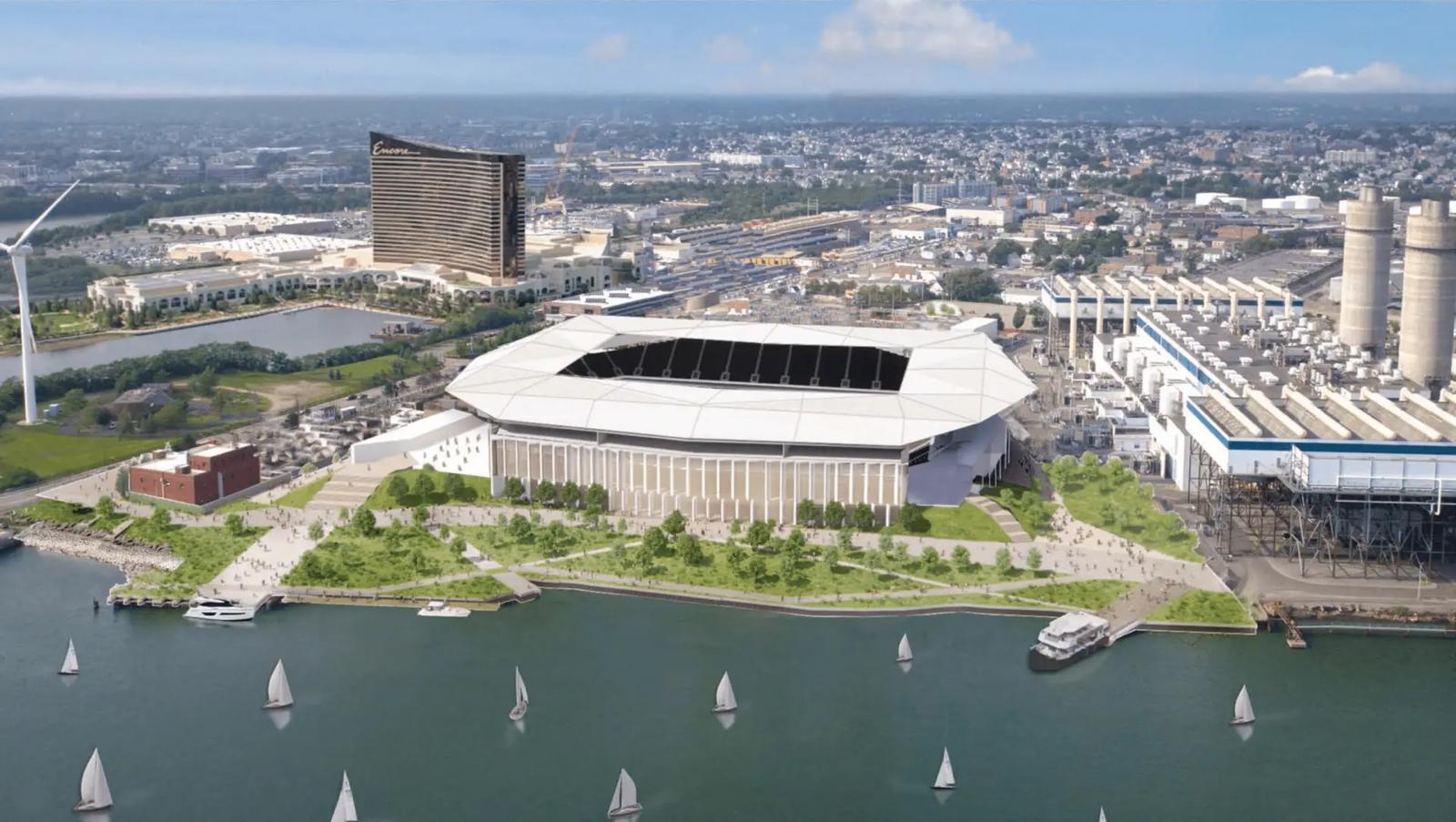
Boston, MA — Mayor Michelle Wu has announced a landmark Community Benefits Agreement (CBA) with the Kraft Group tied to the proposed Everett soccer stadium, promising more than $48 million in investments over 15 years. Beyond the financial commitment, the agreement is being hailed as a blueprint for inclusive development, with a strong focus on racial equity and support for minority communities.
Under the deal, 25% of all construction and stadium contracts will go to minority, women, and veteran-owned businesses, creating unprecedented opportunities for local entrepreneurs who have been historically excluded from major projects. A dedicated advisory group will oversee compliance and ensure equitable distribution of contracts.
The agreement also prioritizes local hiring, reserving 25% of stadium jobs for Boston residents, with targeted recruitment for women, veterans, and communities of color. “This is about building pathways to economic mobility,” said Mayor Wu during the announcement.
Charlestown, a neighborhood with significant representation of people of color, will see direct benefits through a $3 million early payment fund and ongoing revenue streams from ticket surcharges, estimated at $2 million annually. These funds will support community programs, infrastructure upgrades, and public safety initiatives.
Environmental justice is another cornerstone of the agreement. The stadium will meet 2070 flood resilience standards and include safeguards against noise and light pollution, addressing health and environmental concerns that disproportionately affect vulnerable communities.
Transportation improvements—such as a new ferry dock, Bluebikes valet stations, and $5 million for Sullivan Square upgrades—will enhance accessibility for residents and minority-owned businesses.
Community voices played a pivotal role in shaping the agreement, with Charlestown residents and advocacy groups influencing decisions on traffic management, neighborhood protections, and annual public reporting.
“This isn’t just about soccer,” Wu emphasized. “It’s about ensuring development uplifts every community, especially those historically left behind.”
The Kraft Group’s commitments, coupled with the city’s oversight, signal a new era of development that prioritizes racial equity, environmental resilience, and community empowerment.

Said Abdikarim is a visionary business and nonprofit leader with more than a decade of experience in strategic communications, public policy, and civic engagement. His work spans nonprofit, educational, and public-sector organizations, where he has led high-impact initiatives focused on narrative strategy, complex project management, and meaningful engagement with diverse communities and stakeholders.