


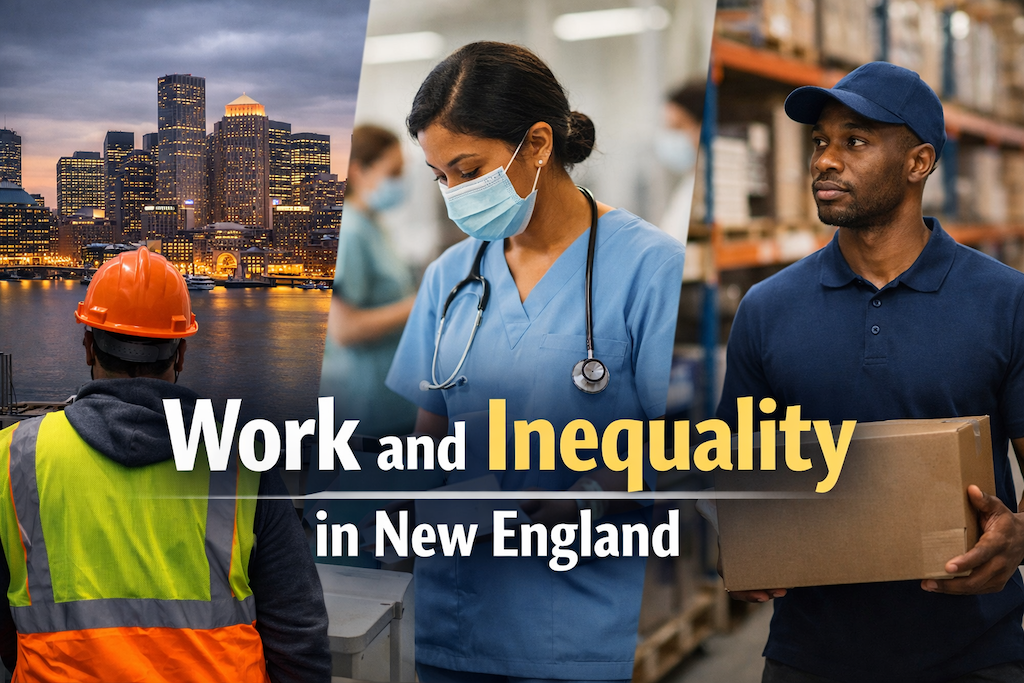
In cities in New England, immigrants and people of color still experience labor and employment barriers that restrict economic stabilization and upward mobility. In Boston, Providence, Hartford, New Haven, and Portland, structural obstacles in the labor market have led to differing access to quality jobs, fair wages, and secure working standards across these communities.
Despite the region’s robust economy and the pressing need for employment, a deeply rooted system of inequality based on race, immigration, and language persists. The immigrants and people of color are also underrepresented in the low-pay sectors like the food industry, healthcare support services, construction, cleaning services, and warehouse employment.
Immigrant workers in cities such as Boston and Cambridge often fill much-needed positions in hospitals, restaurants, and public transport, but they lack job security, benefits, and career growth. Proponents point out that these employees are considered the ones who keep urban economies alive but are often described as expendable.
The barriers to access to higher-paying jobs include language barriers and the non-recognition of credentials. Immigrants with high skills who live in major cities like Worcester, Lowell, and New Haven are often unable to secure jobs that match their education or experience. Usually, U.S. employers do not look at foreign degrees and certifications, which keeps the ethnic immigrants of color in positions that are way below their qualifications.
This imbalance impacts individual livelihoods and drains talent from the local economy. Discrimination in the workplace is a significant problem. The labor rights groups in Massachusetts and Connecticut report that workers of color and immigrants are more likely to report wage theft, poor working conditions, and retaliation.
Particularly vulnerable to exploitation are illegal immigrants, who fear detection by immigration authorities. In other cities, such as Providence and Hartford, supporters document that employers there leverage immigration status to quash complaints and deter unionization.
The emergence of temporary, gig, and subcontracted labor has exacerbated the inequality. Small numbers of immigrants and people of color in New England cities work with staffing agencies that provide little protection.
These jobs lack health insurance, paid leave, and fixed schedules. Subcontracting in the construction and cleaning industries in Boston has complicated workers’ ability to hold employers accountable for labor violations; responsibility is also passed on to workers.
Rising inflation and the COVID-19 pandemic have intensified economic shocks, thereby exacerbating disparities. During the pandemic, immigrant workers of color were the first laid off and the last rehired. The unemployment rates of the black and Latino residents in such cities as Springfield and Brockton have always been higher than those of the white residents.
As the number of jobs recovers, wages have not been increasing at the same pace as the rising cost of living, especially housing and transportation expenses.
Local governments and interest groups have begun reacting, but responses are mixed. In other cities, such as Boston, worker protection offices have been established, wages have been raised, and wage theft is also enforced.
The nonprofit groups in New England are providing job training, legal aid, and language access services to immigrant workers of color. But proponents say that these attempts cannot work without more aggressive policy changes at the state and federal levels.
With New England cities still relying on immigrant labor to support their economies, labor and employment inequities have become an urgent concern. Access to dignified work is not just an economic factor but an issue of equity and justice for immigrants and people of color. Deliberate efforts to dismantle institutional barriers are necessary to prevent employment disparities from perpetuating unequal performance in the region.

Dr. Brian Omolo is an author and professional advisor dedicated to raising the voices of the different communities of New England. He is a PhD holder in Literature from Kenyatta University and a bachelor's degree holder in Pure Mathematics from the University of Nairobi, which justifies his combination of analytical clarity and creative insight.