


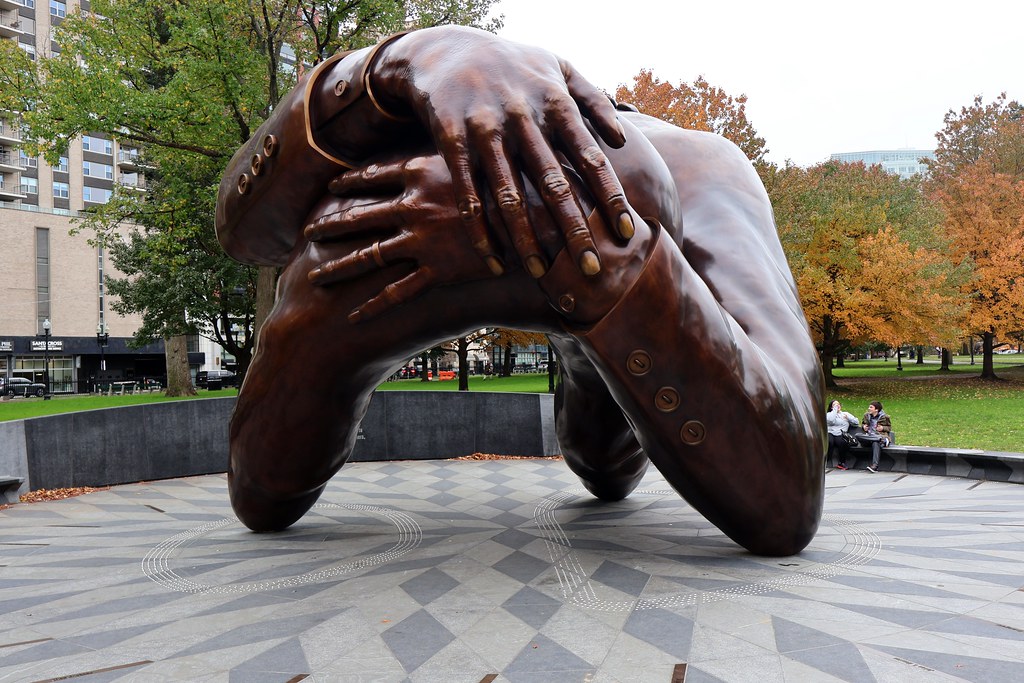
How today’s movements for housing, education, labor rights, and immigrant justice echo Dr. King’s unfinished fight
Dr. Martin Luther King Jr. believed that the struggle for racial justice was inseparable from the fight for economic dignity, human rights, and community empowerment. Across New England in 2024–2026, immigrant communities are taking up that mantle, marching, organizing, and resisting policies that threaten their rights and futures. Their efforts mirror the multiracial coalitions Dr. King envisioned, grounded in solidarity and the belief that justice must include everyone.
Below is a news‑rich, sourced narrative reflecting recent events across the region.
Housing Justice: Immigrant Communities Push Back Amid Crisis
New England’s housing affordability crisis continues to hit immigrants hardest. Legal advocates and immigrant‑serving organizations have been at the frontlines, fighting to protect families from eviction and predatory housing practices.
In July 2025, the Boston City Council supported legislation to end debt‑based driving restrictions, a major burden affecting low‑income immigrants struggling to maintain work and housing stability.
Meanwhile, Massachusetts Legal Services groups celebrated the 2025 banning of renter‑paid broker fees as a major win that alleviates financial strain on thousands of renters, including newly arrived immigrant families.
These actions echo Dr. King’s call for “decent, safe, and sanitary housing for all,” recognizing that housing injustice is a barrier to human dignity.
Education Equity: Immigrant Students and Families Rally for Their Rights
Education justice has become one of New England’s most vibrant organizing fronts.
In March 2025, hundreds gathered at the Massachusetts State House during the 29th Immigrant Day to advocate for safe communities legislation and expanded legal protections. Haitian performers, community leaders, and immigrant families filled the halls as they pushed back against federal executive orders and called for trust between schools, law enforcement, and immigrant communities.
Around the same time, Massachusetts passed the Protect Education Equity Act, explicitly guaranteeing public education access for students regardless of immigration status—an unprecedented state‑level affirmation of immigrant student rights. The law also mandates the use of trained interpreters and safeguards for multilingual learners and students with disabilities.
Policing, Public Safety, and the Fight for Community Trust
Immigrant‑led organizations in New England have mobilized heavily around policing and public safety issues.
The Massachusetts Immigrant and Refugee Advocacy (MIRA) Coalition continues to lead statewide advocacy, responding to incidents such as the deadly 2025 ICE shooting of Rene Nicole Macklin Good, raising alarms about federal overreach, and pushing for local protections.
Grassroots groups like the LUCE Immigrant Justice Network of Massachusetts also coordinate multilingual community hotlines, dispatching trained volunteers to verify suspected ICE activity and protect families from raids and misinformation. Their organizing power reflects community‑driven safety models rooted in collective care.
Worker & Labor Rights: Echoes of the Poor People’s Campaign
MLK’s final campaign, the Poor People’s Campaign, centered on economic justice. Today, immigrant workers in New England continue that struggle.
Legal groups such as Greater Boston Legal Services have filed lawsuits on behalf of immigrant worker advocacy organizations, challenging the IRS and the Social Security Administration’s records-sharing and fighting for worker privacy and protections.
Massachusetts labor leaders have also joined education and community marches advocating for fair wages, anti‑racist protections, and funding for schools that serve immigrant neighborhoods. In New Haven, nearly 300 families, teachers, and students marched in March 2025 to defend public education from federal cuts—an effort driven by communities of color and immigrant families.
These worker‑centered movements uphold MLK’s conviction that “freedom is not enough without economic security.”
Refugee & Asylum Protections: A Region Mobilizing Amid Federal Crackdowns
Following the Trump administration’s 2025–2026 suspensions and cuts to refugee programs, New England refugees and allies mobilized to defend humanitarian protections.
Local resettlement agencies, including the International Institute of New England, faced layoffs, service cuts, and growing instability as federal funding dried up. Community advocates worked urgently to fill gaps and rally support for newly arrived families left without resources.
Across New England, vigils, community meetings, and advocacy campaigns emerged to protect asylum seekers and demand humane policies, consistent with the compassionate approach MLK championed.
A Legacy Continued: Immigrant Marchers as Today’s Moral Leaders
From Boston to Providence, from Manchester to New Haven, immigrant communities across New England are not simply participating in civic life; they are increasingly defining it. Their marches, rallies, and grassroots advocacy echo the same unwavering commitment to justice that animated Dr. Martin Luther King Jr.’s life’s work. In neighborhoods where safety remains uncertain, they organize to protect one another. In schools where access and equity are uneven, they demand fair treatment, inclusive policies, and culturally responsive education.
In the face of harassment, detention, and the threat of deportation, they stand together to secure the legal protections every family deserves. And across the region’s cities and towns, they continue to push for affordable housing, dignified work, and full recognition as members of the civic and democratic fabric of New England.
To honor Dr. King is to recognize that the struggle for justice did not end with the victories of the civil rights era. It lives on in the immigrant organizers who march for their communities, speak truth to power, and imagine a more just and compassionate society. Today’s immigrant marchers are not only preserving King’s legacy but also advancing it, carrying the torch of justice into a new generation.

Abdullahi Hussein is a community journalist focused on uplifting immigrant voices and local stories in Boston. He is also our director of editorial and development.