

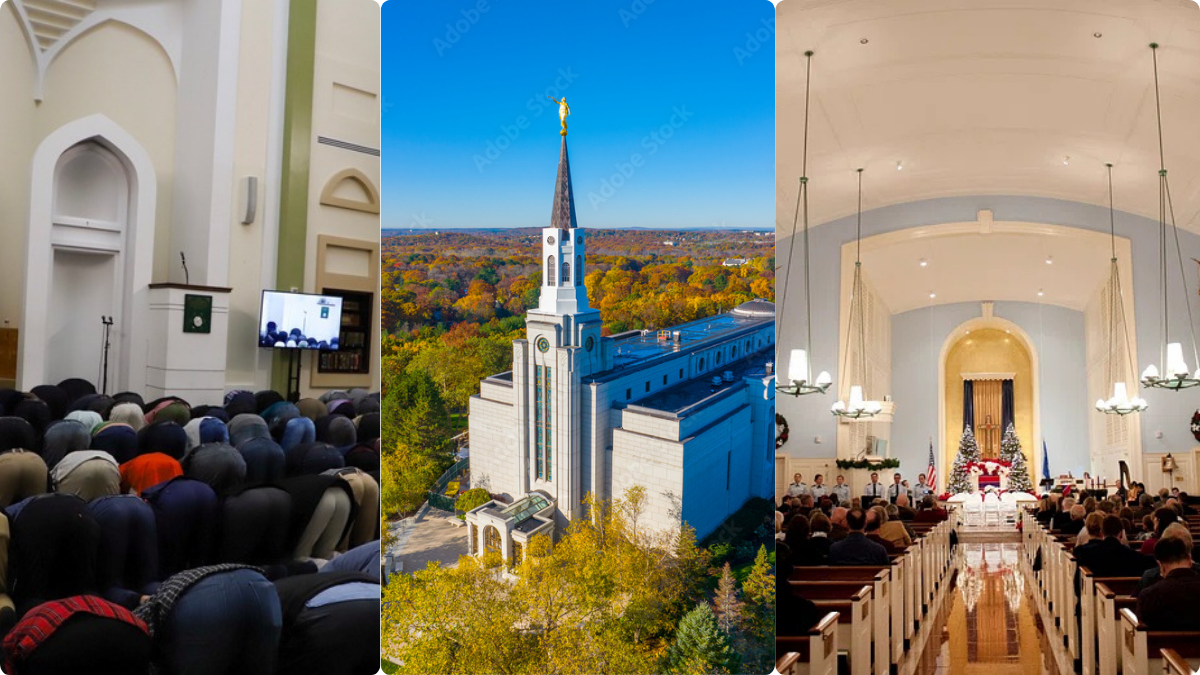
Faith centers across New England—mosques, churches, and temples that have anchored immigrant and working-class communities for generations—are facing an unprecedented strain. A combination of federal immigration policy changes, declining attendance due to fear of enforcement, and shrinking security-grant funding has created a crisis that religious leaders say threatens both spiritual life and the social services these institutions provide.
Many of the region’s faith centers serve communities deeply tied to East African, Latino, Arab, Caribbean, and South Asian migration. What leaders report today is not just a financial problem, but a deep disruption that reaches into the emotional and spiritual stability of entire families.
Immigration Fear Is Quietly Emptying Congregations
Across New England, faith leaders report that attendance has dropped sharply—especially among families who are undocumented or living in mixed-status households. This trend is not isolated. In Maine, churches reported that congregants increasingly avoid public worship out of fear of immigration raids or federal presence following recent enforcement shifts.
National reporting echoes these concerns. Religion News Service documented widespread fear and confusion among immigrant-heavy congregations following federal policy changes that left many unsure of their rights and safety when traveling to religious gatherings.
This fear has a ripple effect: fewer people attending services means fewer donations, fewer volunteers, and fewer families participating in programs that many mosques and churches rely on for community cohesion. A Latino-based national report captured this trend clearly:
Although not limited to one religion, these patterns are acutely felt in Muslim communities across New England, where a large share of congregants are immigrants or refugees. Faith leaders say the psychological impact is profound.
A recent statement from Imam Abdulqadir Farah of the Islamic Society of Boston reflects this reality.
“As a Somali immigrant serving a community of 90 nationalities, I see firsthand how federal immigration policies create fear. People who once filled our mosques now stay home, worried about what might happen. This is a heavy burden on families and on our faith institutions.”
Security-Grant Cuts Deepen the Crisis for Mosques and Other Faith Institutions
At the same time that congregational giving is shrinking, many faith centers are facing another major challenge: reduced access to federal security grants meant to help protect religious institutions from rising hate-motivated threats.
In 2024, major cuts to the federal Nonprofit Security Grant Program (NSGP) raised nationwide concerns as funding fell short of the documented needs of religious institutions.
In 2025, the situation worsened for Muslim-led organizations specifically. DHS suspended more than $8 million in security grants after relying on an Islamophobic report to justify denials.
A separate investigation found that dozens of Muslim organizations, including community centers and mosques, were blocked from receiving federal safety funding, despite facing elevated risks.
A Connecticut-based report highlights that new federal rules may discourage nonprofits from applying at all, adding another layer of complication for already-strained faith institutions.
Financial Challenges Multiply When Congregations Stay Home
When congregants stay home because of immigration fears, weekly donations decline immediately, and for mosques that rely entirely on community contributions, this drop is especially damaging. The decrease in attendance also reduces the number of volunteers available to support youth programs, food pantries, language classes, and other essential services that depend on consistent community participation.
As revenue shrinks, faith centers struggle to cover basic operational costs such as utilities, insurance, security, and building maintenance. In many cases, these combined pressures have forced mosques and other houses of worship to scale back or temporarily pause vital social services, further weakening the support systems that immigrant and low-income families depend on.
National research supports this broader trend. Pew Research Center finds worship attendance remains below pre-pandemic levels, adding further pressure to congregational budgets.
Faith Leaders Say the Crisis Requires Urgent Action
Leaders across New England describe a crisis unfolding in real time—one that affects not only worship practices but also the critical social supports that faith centers provide.
In Boston, Imam Abdulqadir and other religious leaders have urged local officials to recognize the impact of federal policies on congregational life and community stability. Their message reflects what many faith leaders now report: fear is keeping families home, and the result is weakening the financial and social lifelines that faith institutions provide.
One New England mosque leader explained it this way: “Our mosque places full trust in Allah, but the reality on the ground is difficult. Federal immigration policies have created fear that keeps families home, and when people stay home, donations fall. This masjid has stood for generations—yet today our stability is being tested from every angle.”
Other leaders across denominations say a coordinated response is needed from government, donors, and municipalities.
A Call for Stability, Safety, and Support
The message from New England’s faith leaders is consistent: families should feel safe traveling to worship, and houses of worship should have stable access to security funding. The combination of federal enforcement policy shifts and shrinking security grants has created instability that risks permanently weakening the region’s most important community institutions.
Mosques, churches, and temples have long served as sanctuaries of hope and resilience. Their current struggles show a community landscape in urgent need of clarity, compassion, and partnership. Until policies align with lived realities and funding meets actual needs, many of these faith centers will continue to face uncertainty in delivering the spiritual and social support their communities rely on.

Abdullahi Hussein is a community journalist focused on uplifting immigrant voices and local stories in Boston. He is also our director of editorial and development.