

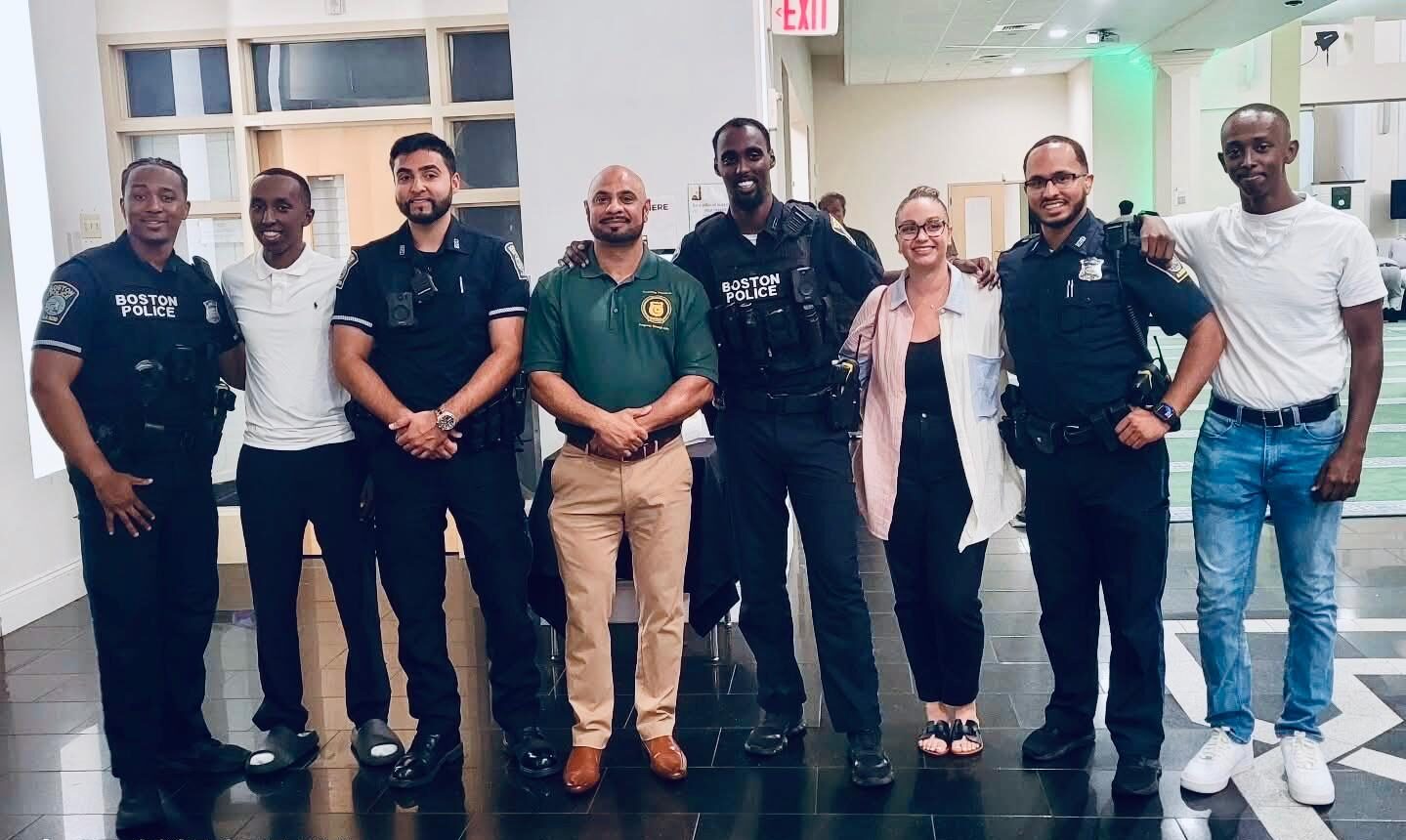
The Boston Police Department (BPD) is slowly becoming a stronger reflection of the diverse communities it serves—communities shaped by immigrants, cultural variety, and religious diversity. Boston continues to evolve into a city where more than 28% of residents are foreign-born, according to the city of Boston’s Immigrant Demographics
City officials say these demographic changes make it essential that BPD recruits officers who understand the communities they serve. Immigrant and Muslim officers—many of them first- or second-generation Americans—are increasingly present in patrol units, community outreach programs, youth initiatives, and leadership roles. Their growing visibility has encouraged new internal conversations about cultural sensitivity, religious accommodation, and fair pathways to career advancement.
But despite the progress, officers and community advocates say important gaps remain.
Expanding Diversity Through Community-Based Recruitment
To adapt to Boston’s rapidly changing demographics, BPD has broadened its recruitment efforts to include immigrant-serving programs, local mosques, and youth-focused pipelines such as the Boston Police Cadet Program, which prepares young adults for careers in law enforcement.
These initiatives attract candidates who may have previously dismissed policing due to mistrust, limited exposure, or concerns about cultural representation.
Muslim Officers Strengthening Community Relations
Muslim officers continue to play an important role in strengthening trust between the Boston Police Department (BPD) and many immigrant communities, especially in neighborhoods where mistrust of law enforcement grew after 9/11. Residents often report feeling more comfortable approaching an officer who understands their cultural background or speaks their language.
In recent years, BPD has expanded efforts to improve cultural understanding and community relationships by increasing recruitment through local mosques and immigrant-serving organizations, expanding outreach through the Boston Police Cadet Program and providing training officers in cultural competency and community-policing best practices, consistent with U.S. Department of Justice guidelines
These community-focused efforts aim to create more positive interactions with Boston’s diverse population.
Leadership Signals Unified Push for Trust and Diversity in Policing
After securing her second term in November 2025, Mayor Michelle Wu reaffirmed that Boston’s approach to public safety must be rooted in trust and representation. She emphasized the city’s commitment to “deepening trust between our police officers and our communities,” a stance that aligns with ongoing efforts to diversify the department and expand recruitment in immigrant and underrepresented neighborhoods.
Boston Police Commissioner Michael Cox has also emphasized the importance of diversity, representation, and trust-building within the department. In an interview with The Boston Globe, he stated that “a diverse officer corps helps the department build trust among Boston’s many ethnic communities,” adding that the BPD “needs to look like the communities that we serve” to operate effectively and fairly.
Said Abdikarim, former director of the Islamic Society of Boston Cultural Center (the largest Islamic center in New England), emphasized the need for structural reforms that center on diversity. “Promote diversity and representation in the police force to prevent decisions based on stereotypes or limited cultural awareness. Engage officers from diverse backgrounds to co-develop and facilitate training that addresses Islamophobia, stereotypes, and bias. Assign specific officers from these groups to lead initiatives focused on creating diverse policy initiatives,” Abdikarim said.
His remarks reinforce the growing consensus that meaningful community trust depends on a police department that reflects—and understands—the communities it serves.
Ongoing Challenges: Bias, Representation, and Advancement
Despite improvements, many immigrant and Muslim officers report lingering challenges such as workplace bias, suspicion toward their loyalty, or barriers to promotion. Research from the National Institute of Justice (NIJ) shows that police departments nationwide often struggle to match the demographic diversity of the communities they serve, particularly in leadership roles:
Pew Research Center’s national analysis provides similar findings—most police forces remain less diverse than the cities they protect, especially at the command level.
These disparities mirror the concerns of local officers, who say representation alone is not enough without equitable opportunities for advancement.
Bridging the Gap Between Law Enforcement and Communities
As Boston continues to diversify its police force, immigrant and Muslim officers are shaping a new relationship between the department and the city’s multicultural neighborhoods. Their contributions help improve communication, break down stereotypes, encourage public cooperation, inform policy that acknowledges lived experiences, and strengthen trust through representation.
Community policing research from the Department of Justice consistently shows that representation improves public safety outcomes and helps reduce mistrust in marginalized communities.
While current challenges remain—discrimination, career barriers, and underrepresentation in leadership—the growing number of immigrant officers is helping redefine what equitable policing should look like in Boston.
A Department Reflecting a Changing City
For many immigrant and Muslim officers, serving in the BPD is both personal and purposeful. It is a chance to help shape a department that evolves alongside the communities it protects.
And for Boston’s neighborhoods, this represents a meaningful step toward a police department that looks more like the city itself: diverse, dynamic, and connected to the people.
Abdullahi Hussein is a community journalist focused on uplifting immigrant voices and local stories in Boston. He is also our director of editorial and development.