

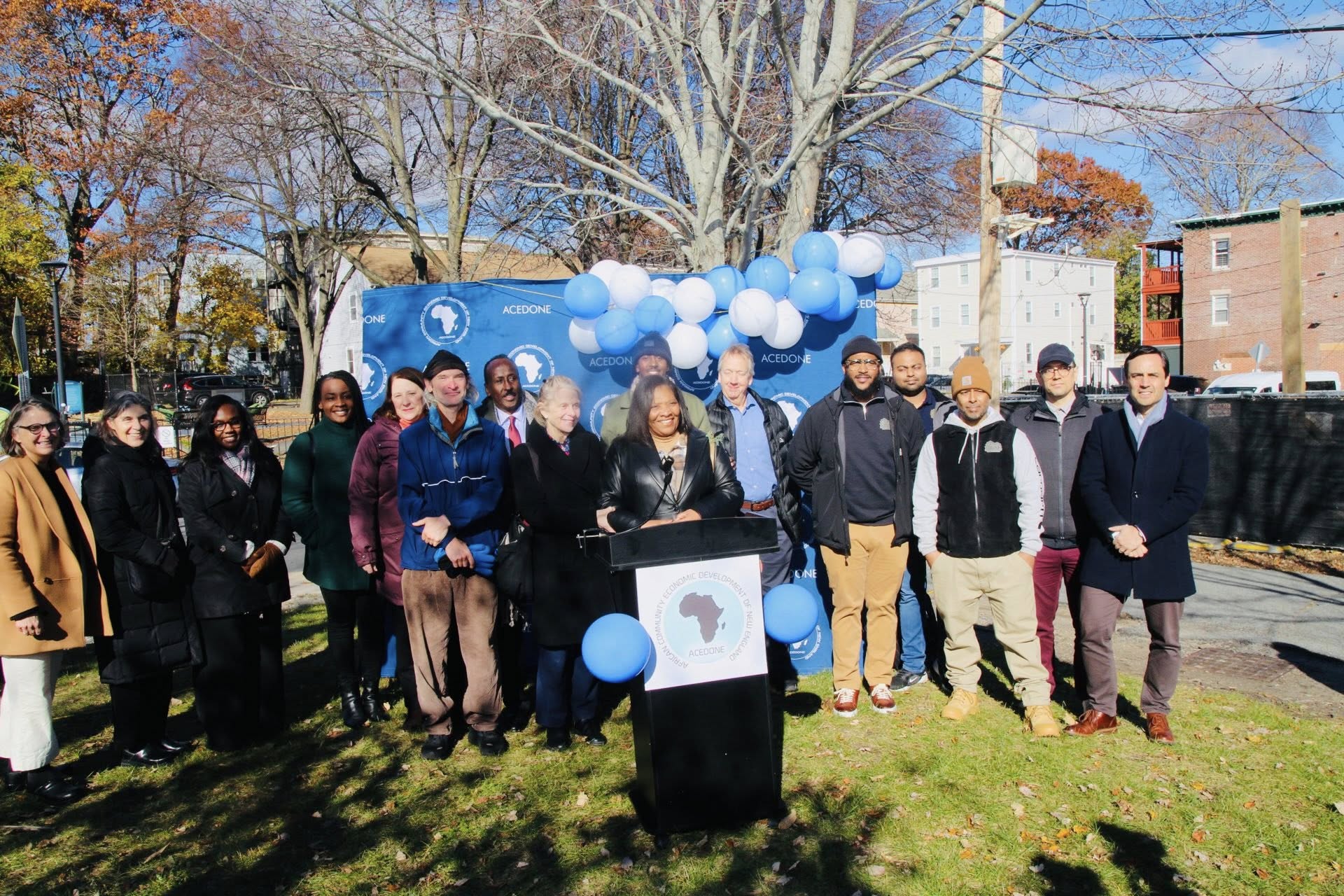
Boston, MA — The City of Boston has marked a major milestone in its affordable homeownership strategy with a groundbreaking ceremony in Dorchester, signaling the start of construction on the final lots of Phase I of the Welcome Home, Boston (WHB) initiative. The event celebrated the launch of the Erie/Glenway development, led by the African Community Economic Development of New England (ACEDONE).
Originally introduced by Mayor Michelle Wu during her 2023 State of the City address, Welcome Home, Boston aims to close the racial wealth gap by expanding access to affordable homeownership—particularly for first-time buyers and BIPOC households.
The initiative not only focuses on creating affordable homes but also uplifts local talent by supporting small, minority-led development and construction firms with access to city-owned land, capital, and technical guidance.
At the ceremony, ACEDONE Founder and CEO Abdulkadir Hussein underscored the urgency of the project, noting the increasing number of young professionals forced to leave Boston due to soaring housing costs.
He stated, “Many of our young professionals, the main pillars of our society, are literally leaving the city because they cannot afford homes. This project is a chance to confront that problem.”
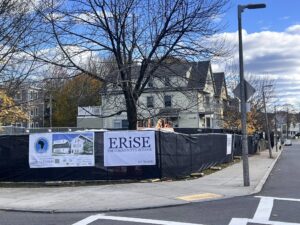
The Erie/Glenway development will add nine new affordable homes across three new buildings, contributing to WHB Phase I’s total of 72 affordable homes spread across 13 parcels in Dorchester. All units are expected to be completed by 2026.
Sheila A. Dillon, Boston’s Chief of Housing, emphasized that the initiative is part of a larger effort under the Wu Administration to expand homeownership opportunities.
She highlighted that Boston’s strategy includes not only construction but also down payment assistance, lower-interest mortgage products, and programs designed to help longtime residents remain in their neighborhoods.
“The high-quality housing being offered at affordable prices—together with down payment assistance and accessible mortgage options—helps residents own the city they love,” Dillon said.

Phase I features several BIPOC-led and community-rooted development teams, including ACEDONE, Boston Communities, Dorchester Design Collaborative, and Norfolk Design and Construction. Their involvement reflects one of the program’s core goals: increasing wealth-building opportunities among communities historically excluded from real estate development.
Phase II of Welcome Home, Boston is already underway. Construction has begun on the VIBE/MCMI team’s project on Ballou and Selden Streets in Mattapan, which will deliver 18 new homes. Additional Phase II developments across Roxbury, Dorchester, and Mattapan are expected to break ground in winter 2025–2026, producing 72 more income-restricted homes.
Before the end of 2024, the City will begin evaluating developer proposals for Phase III, which includes 11 parcels across Hyde Park, Roslindale, Dorchester, and Roxbury. Future homes will align with Boston’s climate resiliency standards, ensuring they are energy-efficient and environmentally sustainable.
The Welcome Home initiative builds on existing programs offered through the Boston Home Center, including: Homebuyer education, Financial assistance, the One+Boston mortgage product, and Incentives to reduce construction timelines and costs.
Under Mayor Wu’s leadership, the City has already initiated or completed more than 18,000 new homes, thousands of which include income-restricted units.
MassHousing CEO, Chrystal Kornegay praised Boston’s commitment to equitable access and generational wealth-building:
“This program provides families the stability they need to establish roots and succeed.”
With the combined goals of affordability, climate responsiveness, and community empowerment, Welcome Home, Boston continues to be a cornerstone of the city’s strategy to build a more stable and inclusive future for its residents.

Dr. Brian Omolo is an author and professional advisor dedicated to raising the voices of the different communities of New England. He is a PhD holder in Literature from Kenyatta University and a bachelor's degree holder in Pure Mathematics from the University of Nairobi, which justifies his combination of analytical clarity and creative insight.