


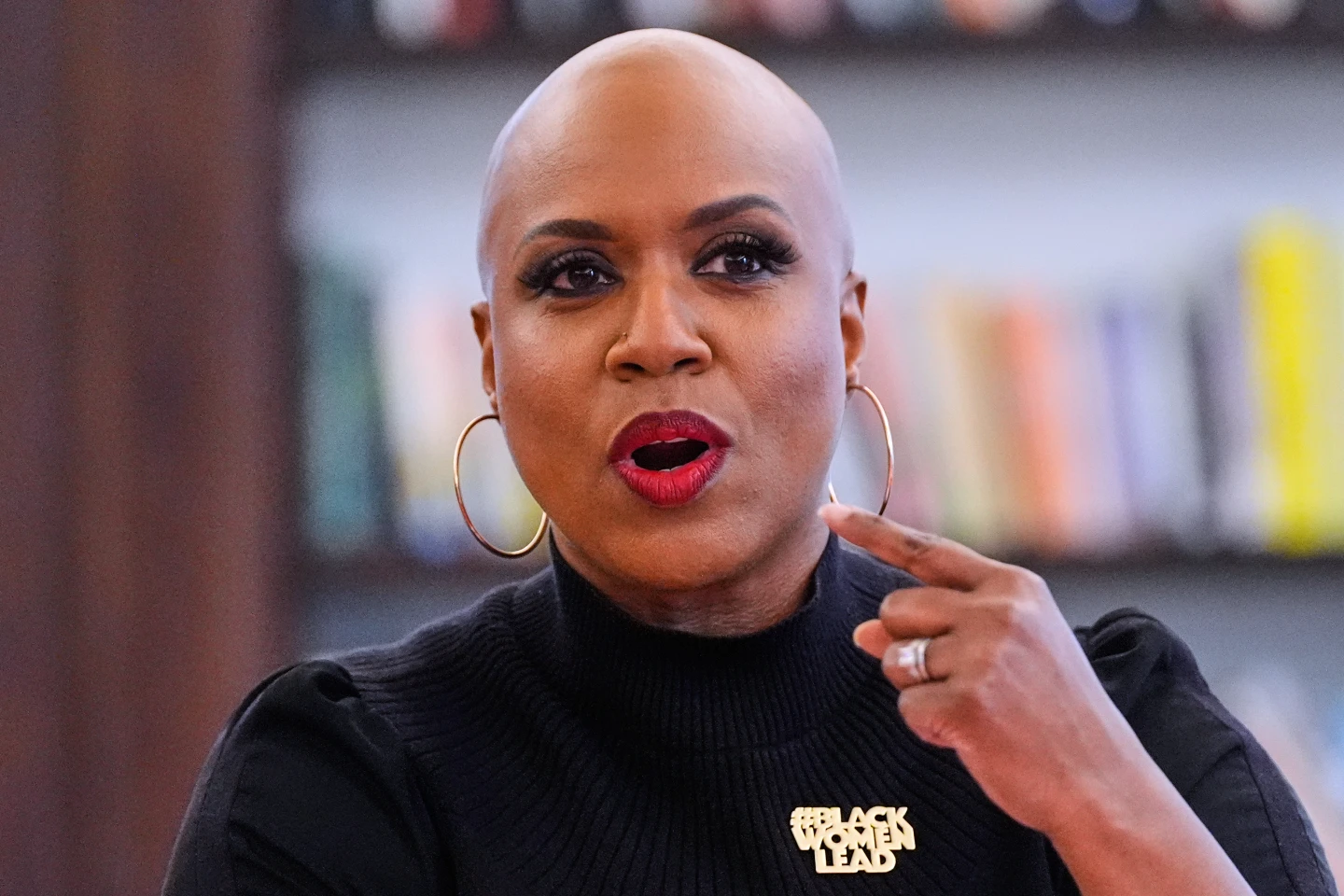
During a roundtable discussion held in Boston on November 24, 2025, Congresswoman Ayanna Pressley raised a critical question:
“Why are Black women—who have some of the highest labor force participation rates in the country—now experiencing unemployment increases at some of the fastest rates?”
Data from the Bureau of Labor Statistics underscores the urgency of her concern. Unemployment among Black women rose from 6.7% in August to 7.5% in September 2025, a significantly sharper increase than that of white women, whose unemployment shifted only from 3.2% to 3.4%. Pressley emphasized that these numbers are not accidental fluctuations but the result of deliberate policy shifts.
“These statistics are sickening,” Pressley said. “They confirm what many of us already know: under Donald J. Trump, Black women are facing a crisis of disproportionately high unemployment.”
(Full remarks: YouTube link included in original file.)
According to Pressley, Black women are overrepresented in the public sector and in federal agencies that have experienced the harshest layoffs—such as the Department of Education, consumer-finance regulators, and various social-service institutions. As federal cuts and contract reductions continue, Black women are being disproportionately pushed out of stable, long-standing careers.
Pressley described this as a “systemic pushout,” warning that it is not only a crisis for Black women but a sign of more profound economic instability.
“This is not merely a Black women’s crisis,” she said. “It is an omen of bad economic times, with lethal consequences for Black women, Black families, and Black futures.”
Historically, Black women have been highly represented in sectors such as healthcare, Social services, Retail and Government administration
Layoffs in these areas are already reverberating across households and communities. Analysts at the roundtable cautioned that when large numbers of Black women lose jobs, the effects spill beyond individual families. The fallout disrupts Household income stability, Consumer spending, Local economies and Availability and quality of social services
Because Black women are often primary breadwinners, their unemployment represents both a personal financial crisis and a broader threat to community well-being.
Participants at the roundtable urged urgent policy interventions, including: Restoring and expanding aid to minority-owned businesses, increasing access to microloans, ensuring transparency and fairness in corporate hiring practices, and protecting, not dismantling, diversity, equity, and inclusion (DEI) initiatives.
Experts noted that eliminating DEI programs has weakened pathways to employment and reduced accountability in hiring practices—intensifying disparities.
When examining the scope of the impact, Pressley and others argue that this is not a demographic anomaly or temporary fluctuation. It represents a structural warning sign.
As cited in related reporting (Tye, 2024), targeted policy reversals can destabilize entire communities, mainly when they disproportionately affect a group that already serves as an economic anchor.
If unaddressed, the consequences could widen inequality, depress economic mobility, and erode progress made toward closing the racial wealth gap.
The surge in unemployment among Black women—to 7.5% in September 2025—is more than a data point. It reflects profound disruption caused by sweeping federal layoffs and the dismantling of DEI-related hiring protections. As Pressley emphasized, this crisis affects not only individuals but also threatens the financial health, stability, and future of countless families and communities.
Without immediate policy responses rooted in equity, economic support, and structural accountability, the impact will continue to spread, deepening inequality across the U.S. labor market.
Black women’s unemployment is not a footnote; it is a warning. And policymakers must decide whether they will listen.

Abdullahi Hussein is a community journalist focused on uplifting immigrant voices and local stories in Boston. He is also our director of editorial and development.

Dr. Brian Omolo is an author and professional advisor dedicated to raising the voices of the different communities of New England. He is a PhD holder in Literature from Kenyatta University and a bachelor's degree holder in Pure Mathematics from the University of Nairobi, which justifies his combination of analytical clarity and creative insight.