

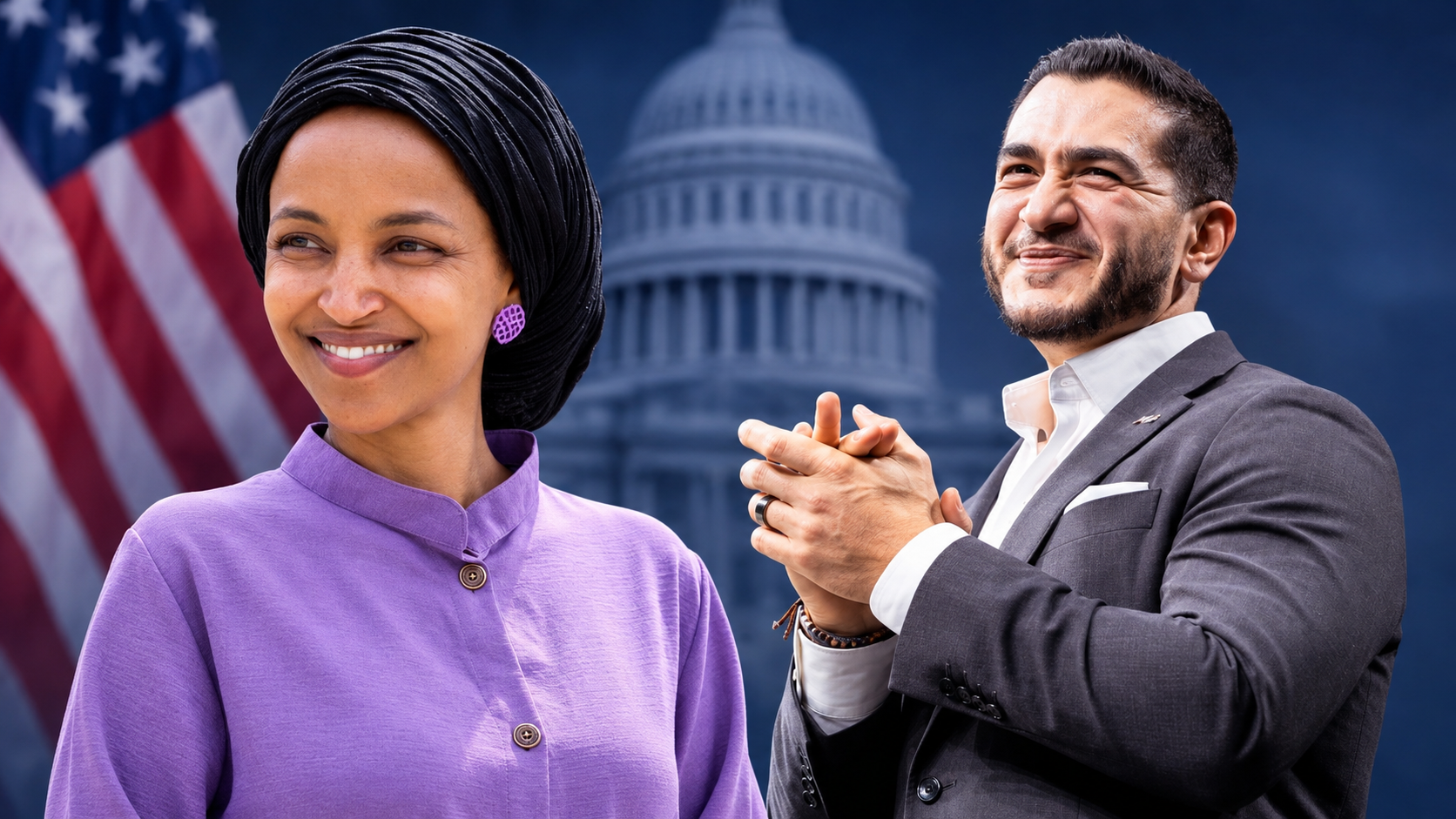
Muslim Americans like Ilhan Omar and Abdul El-Sayed have recently encountered political problems and certain issues have arisen around American democracy, namely how much criticism of a politician’s ideas is acceptable, and how much is discrimination against the politician’s religious identity.
The contributions made by their experiences illuminate the difficulties Muslim candidates face when campaigning for public office while simultaneously facing political arguments, religious prejudice, and questions about belonging.
When Political Criticism Becomes Religious Prejudice
Minnesota’s 5th Congressional District Democratic Rep. Ilhan Omar has been in hot water over her remarks regarding Israel and U.S. foreign policy, especially regarding the Israeli-Palestinian conflict, on numerous occasions. Her remarks have drawn criticism not only from other Democrats and Republicans but also from other Jewish members of the Trump administration. Many of her comments have been the subject of criticism from other Democrats and Republicans, and even from other Jewish members of the Trump administration, including allegations of antisemitism. In some cases, Omar has apologized for such comments as they were upsetting and, in some cases, defended her positions. These debates illustrate the need to look at political criticism in the right context, rather than presuming it is religious discrimination.
El-Sayed and the 2026 Michigan Senate Campaign
It has been made more public in the 2026 Michigan Senate race. On August 4, 2026, Abdul El-Sayed, a physician and former director of the Detroit Health Department, was elected the Democratic Senate nominee. He has garnered national attention as he may well be the first Muslim to be elected to the U.S. Senate. After his initial win, Republican Senator Tommy Tuberville posted, referring to him as a terrorist and radical Islamist, on social media in August. Other conservatives, of course, raised doubts about his religious links and his political connections. At a rally in Port Huron on Oct. 25, President Donald Trump called El-Sayed a “jihadist” and hinted he would not be able to handle national security.
El-Sayed has denied ever being involved with any extreme group. He was once asked in October, “If you’re a Muslim, are you prepared to disavow the Muslim Brotherhood?” and responded, “Sure. Yeah, absolutely,” in response to the question before asking, “Why is that a question for a Muslim? He has also refused to ever have been a member of the group. His campaign called the attacks a distraction from the issues. The difference is, it is acceptable political questioning to question policies, public statements or associations of a candidate. Giving Muslim identity as reason for terrorism or disloyalty though, amounts to religious stereotyping. A candidate’s actions should be evaluated based on his or her demonstrated behavior, not on presumed actions of an entire faith community.
The Impact on Muslim Communities in New England
However, conflicts are not restricted to the national political arena. In Massachusetts and Maine, too, Muslim residents have suffered the effects of religious stereotyping. Tahirah Amatul-Wadud, executive director of the Massachusetts chapter of the Council on American-Islamic Relations (CAIR), shared her personal story of running for Congress in Massachusetts.
She did not focus on the health and childcare, but threats and accusations that she wanted to establish Islamic Sharia law were directed at her. Each day, I had to turn myself into a human being, she said. Similar problems have been faced in Cambridge. Sumbul Siddiqui, the city’s first Muslim American mayor, told WBUR that she’s been receiving Islamophobic messages since she was appointed in January 2020. She said these experiences were “par for the course, unfortunately.”
A Wider Political Challenge
New England has not been left out of the national discussion. In September 2026, NPR reported that anti-Muslim rhetoric was becoming more prevalent in the Republican campaign messaging. The report was also broadcast on Maine Public Radio and New Hampshire Public Radio, two radio stations that mark the rising trend of political calls to action based on claims of “radical Islam” and Sharia law. Muslim Americans don’t care just if a candidate wins an election. It’s whether they can join in democracy without defending their religion first in discussing their policies.
Omar and El-Sayed are a significant case of political inclusion in America. Their actions should be held to the same standard as other politicians. Their faith should never be used as an indicator of disloyalty or extremism, however.
Abdullahi Hussein is a community journalist focused on uplifting immigrant voices and local stories in Boston. He is also our director of editorial and development.