

Comprehensive analysis based on recent reporting and official sources.
The U.S. Immigration and Customs Enforcement (ICE) agency has initiated heightened immigration enforcement operations in Maine and Massachusetts, prompting significant anxiety among immigrant families, people of color (PoC), and community advocates. These actions are part of a broader federal strategy under the current Trump administration that officials say is designed to target individuals with criminal records, but which many community members and leaders argue disproportionately affects immigrant communities that “don’t look like white.”
ICE Operations in Maine: “Operation Catch of the Day”
In Maine, ICE confirmed the launch of an enforcement surge dubbed Operation Catch of the Day, resulting in nearly 50 arrests during the first days of activity in January 2026. Federal officials say the operation focuses on undocumented immigrants with criminal convictions.
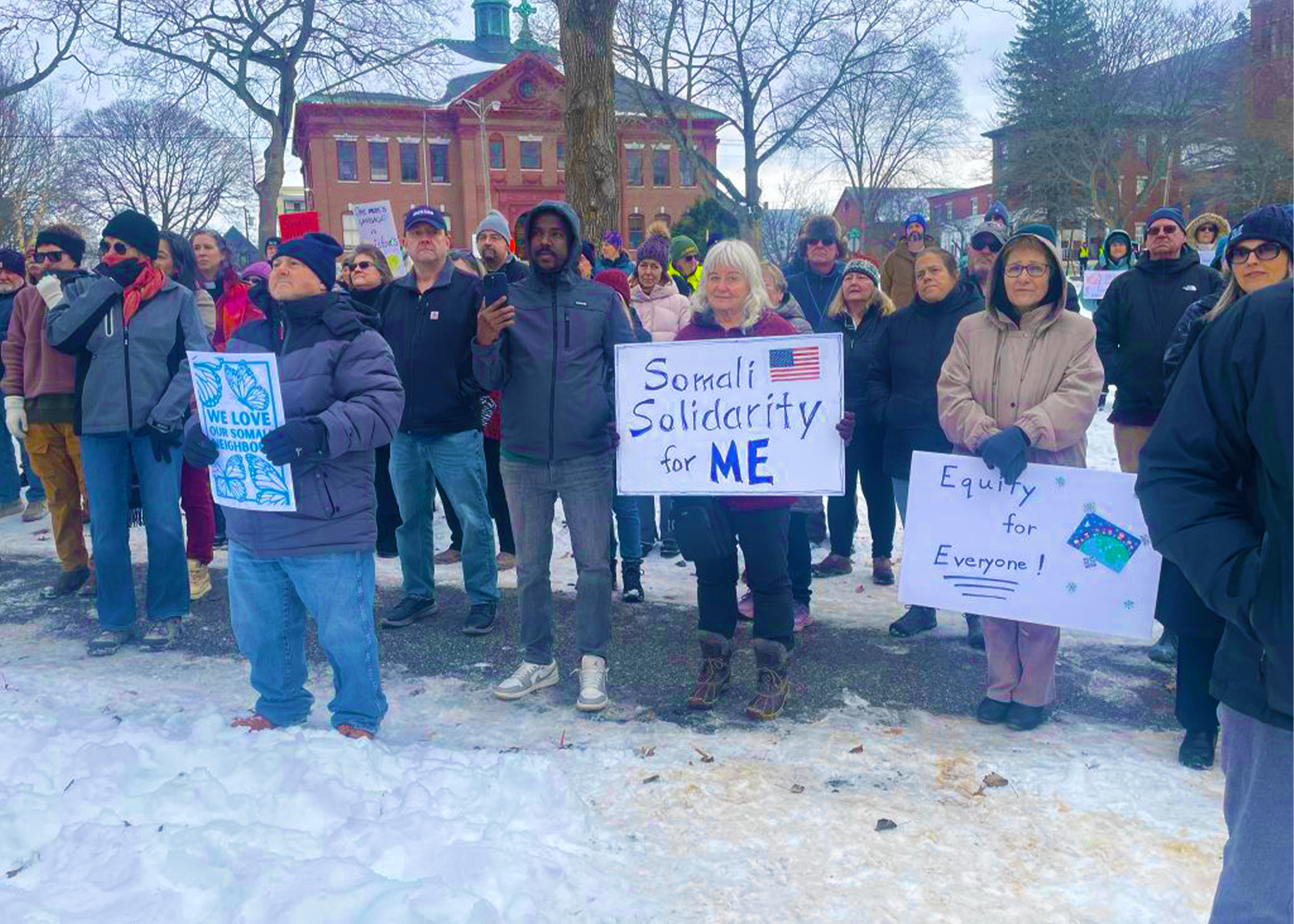
Despite those stated aims, the sudden presence of ICE agents in Lewiston and Portland, cities with substantial Somali and African immigrant populations, has triggered widespread fear among families and communities. Reports from local residents indicate that many avoid public spaces, send children to school less often, and hesitate to go to work due to concern about being stopped or detained.
Maine’s governor and city leaders have publicly criticized the tactics. Governor Janet Mills characterized some enforcement actions as fostering intimidation and fear rather than enhancing safety, and Portland’s mayor rejected what he described as ICE’s “paramilitary approach.”
Advocates also note the symbolic impact of the operation’s name, which many perceive as dehumanizing, and the relatively low undocumented immigrant population in Maine overall, raising questions about the proportionality and focus of the enforcement effort.
Massachusetts Enforcement History and Community Response
In Massachusetts, ICE and federal partners have previously conducted large-scale operations. In 2025, Operation Patriot and its follow-on, Patriot 2.0, resulted in over 1,400 arrests of noncitizens during months-long enforcement efforts. Federal officials asserted that these targeted individuals have serious criminal histories.
Community advocates and some news reporting, however, documented instances in which people without criminal records or with lawful presence claims were nonetheless detained, illustrating how broad enforcement can sweep up individuals and families who contribute to their communities.
Across New England, local organizations and activists have mobilized “ICE watch” networks, legal support, and rapid-response teams to help families understand their rights and seek assistance if federal agents appear. Some residents report anxiety not only about ICE actions but also about the racialized context in which enforcement occurs, given that many targeted communities are predominantly nonwhite.
Concerns from Families and Communities of Color
Families of immigrants and PoC communities raise several interrelated concerns around these enforcement operations:
-
Fear of Family Separation: Enforcement sweeps have a chilling effect on family life, as community members express deep worry that a routine traffic stop or workplace interaction could result in a parent or caregiver being taken into custody.
-
Racial Targeting and Disproportionate Impact: Even when ICE emphasizes criminal histories, community leaders argue that enforcement typically disproportionately impacts Black and brown immigrants, especially in cities with visible East African and Latin American communities. The experience in Maine exemplifies this dynamic, as Somali refugees make up a significant share of affected neighborhoods.
-
Community Trust and Public Safety: Local officials in both states note the tension between enforcement and public safety. Many families now report reluctance to report crimes, seek medical care, or participate in community life for fear of drawing attention to their immigration status.
-
Political and Social Context: These enforcement actions occur against broader debates about sanctuary policies, civil rights protections, and federal–local cooperation in immigration enforcement. Leaders in Maine and Massachusetts have resisted federal pressure to assist ICE, citing constitutional protections and the need to maintain trust between residents and local institutions.
ICE’s recent enforcement surges in Maine and prior operations in Massachusetts underscore a relentless nationwide effort to enforce immigration laws more aggressively. While federal officials frame these efforts as necessary to remove individuals with serious criminal histories, families of immigrants and community advocates highlight the fear, disruption, and disproportionate impact on PoC communities. These tensions reflect deeper societal debates about immigration policy, racial equity, and the balance between law enforcement and community stability.
Said Abdikarim is a visionary business and nonprofit leader with more than a decade of experience in strategic communications, public policy, and civic engagement. His work spans nonprofit, educational, and public-sector organizations, where he has led high-impact initiatives focused on narrative strategy, complex project management, and meaningful engagement with diverse communities and stakeholders.