


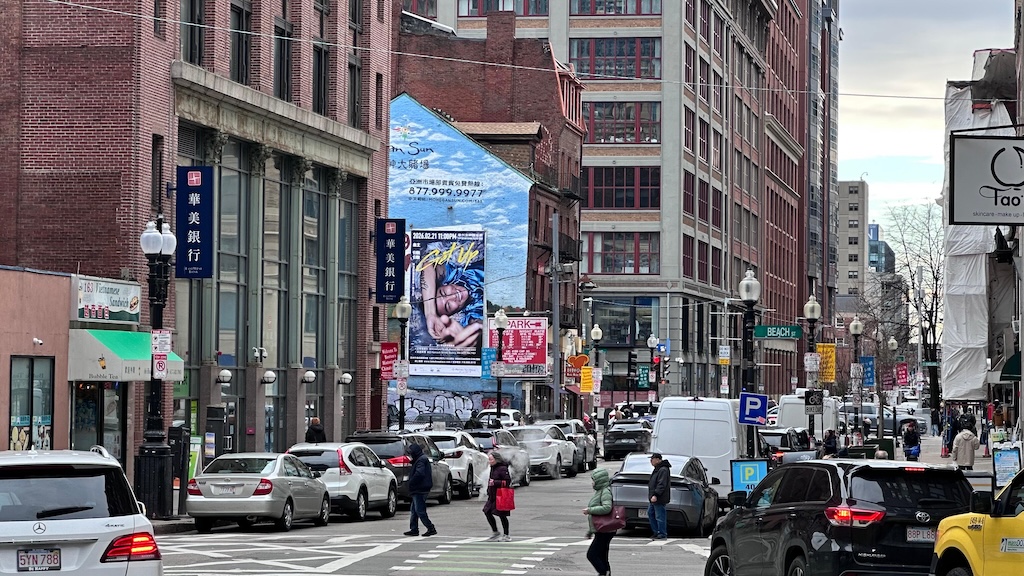
Boston’s Chinatown, one of the city’s most historic immigrant neighborhoods, is experiencing increasing gentrification pressures that threaten its cultural identity and affordability. Once home to a dense population of Asian immigrants and family-run businesses, recent demographic trends, escalating property values, and new development proposals have sparked concerns among residents, advocates, and community leaders about displacement and the loss of long-standing neighborhood character.
Historic Roots and Community Shifts
Chinatown’s origins date back to the late 19th century, when it served as a vital gateway for Chinese immigrants and later immigrants from across Asia. In recent years, however, the neighborhood has seen demographic shifts and mounting displacement pressures. According to a recent report, Boston’s Chinatown experienced one of the sharpest declines in Asian population among American Chinatowns, with the Asian share of residents falling by more than 20% over the past decade, while rents jumped approximately 55%. These trends underscore the neighborhood’s vulnerability to gentrification as market forces intensify.
Karen Chen, Executive Director of the Chinese Progressive Association, emphasized the human impact of these changes:
“Chinatown residents are disproportionately elderly and 40 percent of families have children but we are losing this working-class core.”
Development Pressures and Community Anxiety
Large development proposals have become symbolic flashpoints in debates over Chinatown’s future. A proposed 25-story hotel project in the heart of the neighborhood drew significant opposition from residents, who argued that it would exacerbate rising rents and drive out long-time tenants and small businesses, intensifying displacement risk. These community concerns reflect broader anxieties about how new projects interact with affordability and neighborhood cohesion.
In addition to individual proposals, discussions around rezoning to allow higher-density development have divided opinion. Some city planning efforts aim to balance growth with housing production, yet critics argue that upzoning without robust affordability safeguards can raise land values and accelerate displacement, particularly for residents with limited economic means and language access.
Karen Chen, Executive Director of Chinese Progressive Association, voiced her concern
“Chinatown residents are disproportionately elderly and 40 percent of families have children but we are losing this working-class core. Being displaced means not only loss of housing and increased stress, but also loss of social networks, multilingual social services, access to nearby jobs, a voice on issues that impacts our lives and much more,” she says.
City Policy: Anti-Displacement Framework and Tools
In response to widespread concern about displacement—not only in Chinatown but across Boston—the City of Boston formalized a comprehensive Anti-Displacement Action Plan called A Place to Thrive. This multi-year strategy outlines more than 40 initiatives aimed at protecting vulnerable renters, preserving affordable housing, and supporting small businesses and cultural institutions at risk of displacement. The plan emphasizes four core pillars: protect, preserve, produce, and prosper, and includes tools such as expanded eviction prevention services, displacement risk mapping, and priority access to housing resources for low-income residents.
While the plan marks a significant shift toward proactively addressing displacement citywide, residents and activists continue to watch implementation closely, emphasizing the need for measurable outcomes and inclusive engagement to ensure that community voices shape growth.
Community-Led Solutions: Affordable Housing and Cultural Anchors
Local organizations are actively defending Chinatown’s cultural and residential fabric. The Asian Community Development Corporation (ACDC), a longstanding community development nonprofit, has played a central role in producing affordable housing and advocating for community-centered development. Founded in 1987, ACDC focuses on preserving economic stability and leadership within the Asian American community, including housing counseling, youth programs, and real estate development that prioritizes affordability over speculative investment.
One of the most visible outcomes of this community-driven effort is the Parcel R-1 redevelopment project at 55 Hudson Street. This initiative, led by ACDC in partnership with the City of Boston, broke ground on a mixed-use development that will deliver 110 affordable homes—including both rental and homeownership units—alongside a permanent Chinatown branch of the Boston Public Library. The project represents a practical model of development without displacement, supporting long-term residents with stable housing and a cultural resource that reinforces community presence.
Cultural Identity and Grassroots Resilience
Beyond housing, Chinatown’s cultural identity is supported by community organizations deeply rooted in advocacy and social services. Groups like the Chinese Progressive Association have historically mobilized immigrant voices for housing justice and equitable access to resources. Their activism reflects decades of community engagement around tenant rights and economic inclusion.
Art and cultural expression also play a role in resisting displacement narratives. Collectives and grassroots efforts use media and public art to spotlight tenant stories and assert community presence, reinforcing Chinatown’s identity against homogenizing market forces.
Bingxiang Ma, a longtime resident, captured the sentiment of many:
“We know how difficult it was to build the community and form Chinatown, that’s why we have to protect Chinatown. We will always protect Chinatown, because it’s passed down from generation to generation.”
Looking Forward: Balancing Growth with Justice
Chinatown’s challenges are not unique among urban ethnic enclaves, yet Boston’s policy response and community engagement efforts illustrate a dynamic interplay between market pressures and grassroots advocacy. While new development and housing production remain critical to addressing broader affordability crises, the ways in which these elements are structured have profound implications for who gets to stay, who benefits, and how cultural heritage is preserved.
Effective anti-displacement strategies require not only policy frameworks and affordable housing production but also authentic community voice, equitable zoning practices, and economic support systems that prioritize long-term tenants and small businesses. As Boston continues to grapple with these tensions, Chinatown stands as a powerful example of community resilience and the urgent need for balanced, inclusive urban growth.

Said Abdikarim is a visionary business and nonprofit leader with more than a decade of experience in strategic communications, public policy, and civic engagement. His work spans nonprofit, educational, and public-sector organizations, where he has led high-impact initiatives focused on narrative strategy, complex project management, and meaningful engagement with diverse communities and stakeholders.