


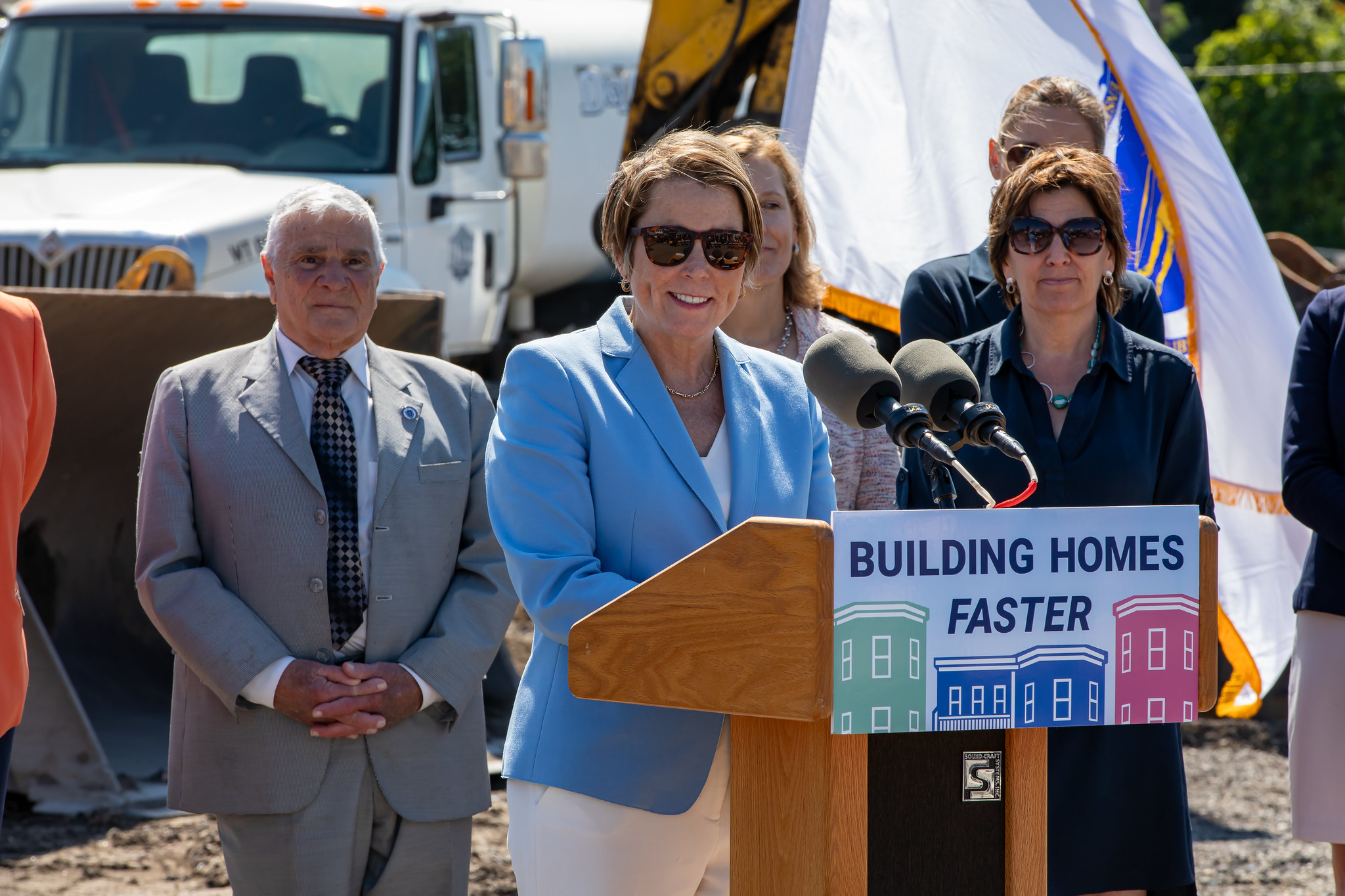
Boston, MA — In a bold move to tackle the state’s housing crisis, Governor Maura Healey announced a sweeping reform that cuts environmental review timelines for qualifying housing projects from over a year to just 30 days. The initiative, part of the administration’s broader housing strategy, aims to get “shovels in the ground faster” and deliver homes that residents can actually afford.
Under the new policy, developers who meet strict criteria—such as building near transit hubs, avoiding flood-prone areas, and incorporating energy-efficient designs—can bypass lengthy Environmental Impact Reports (EIRs) in favor of streamlined Environmental Notification Forms (ENFs). This change is expected to reduce costs by hundreds of thousands of dollars per project and accelerate permitting by months.
“Time is money—for builders, and for renters and buyers,” Healey said during a recent briefing. “By cutting unnecessary delays, we’re making it possible to build the housing Massachusetts families desperately need. It’s our job to make sure government moves at the speed of business, and cutting these regulations will reduce review times from more than a year to 30 days and supercharge the building of homes across Massachusetts.”
Industry experts say the reform could significantly lower development costs and help stabilize rents and home prices. Builders gain from more predictable timelines and reduced financing risks, while communities benefit from faster access to housing. However, critics caution that the expedited process must still safeguard wetlands, wildlife habitats, and climate resilience standards.
Housing advocates welcome the move but stress that it’s only one piece of the puzzle. “Streamlining reviews helps, but we also need zoning reform, infrastructure investment, and long-term affordability measures,” said one policy analyst.
The administration insists environmental protections remain intact, requiring projects to meet sustainability benchmarks and undergo public outreach even within the shortened review window. Still, some worry that faster timelines could limit community input and increase legal challenges from opponents.
With Massachusetts facing one of the nation’s most severe housing shortages, the Healey administration hopes this measure will unlock stalled projects and spur economic growth. Whether it’s enough to ease the crunch remains to be seen, but for now, the message is clear: speed matters.
For more details, read the full press release on Mass.gov: Governor Healey Unveils Nation‑Leading Plan to Cut Environmental Regulations to Fast‑Track Housing Development.

Abdullahi Hussein is a community journalist focused on uplifting immigrant voices and local stories in Boston. He is also our director of editorial and development.