

Voting rights and election oversight continue to present challenges for immigrants and communities of color in New England, despite the region’s progressive reputation. Structural barriers such as language access issues and strict voter identification requirements limit participation in the 2024 elections.
Language access remains a persistent problem.
In Massachusetts, nearly 480,000 working-age residents were classified as Limited English Proficient (LEP) in mid‑2024—around 10% of the workforce. While federal law mandates language assistance in some areas, many municipalities still fail to provide translated ballots or bilingual poll workers, forcing non-English speakers to rely on family members or abstain from voting.
Election policies intended to protect integrity often create unintended obstacles.
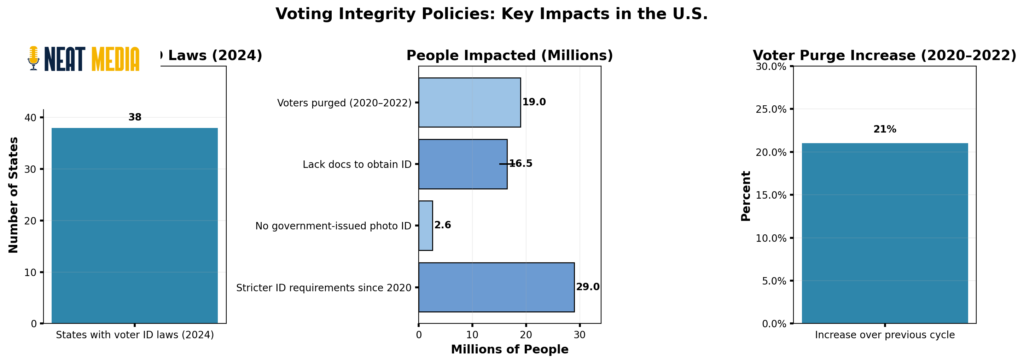
By 2024, 38 states had implemented voter ID laws, with 29 million adults living under stricter requirements enacted since 2020. Approximately 2.6 million Americans lacked any government-issued photo ID, and 15–18 million more lacked the documentation required to obtain one. These barriers disproportionately impact immigrants and low-income individuals in New England. Meanwhile, voter purges continued: over 19 million voters were removed nationally between 2020 and 2022—a 21% jump from the previous cycle.
Immigrants, particularly those from countries with histories of political repression, face additional challenges.
Nationally, nearly 24 million immigrant adults are naturalized U.S. citizens—about 10% of the electorate. In 2024, about 97% of naturalized citizens reported they “probably or definitely will vote,” reflecting strong engagement—up from 87% in 2020. However, confusion over eligibility and fear persist in some communities, including Worcester and Somerville.
Physical barriers also impact communities of color.
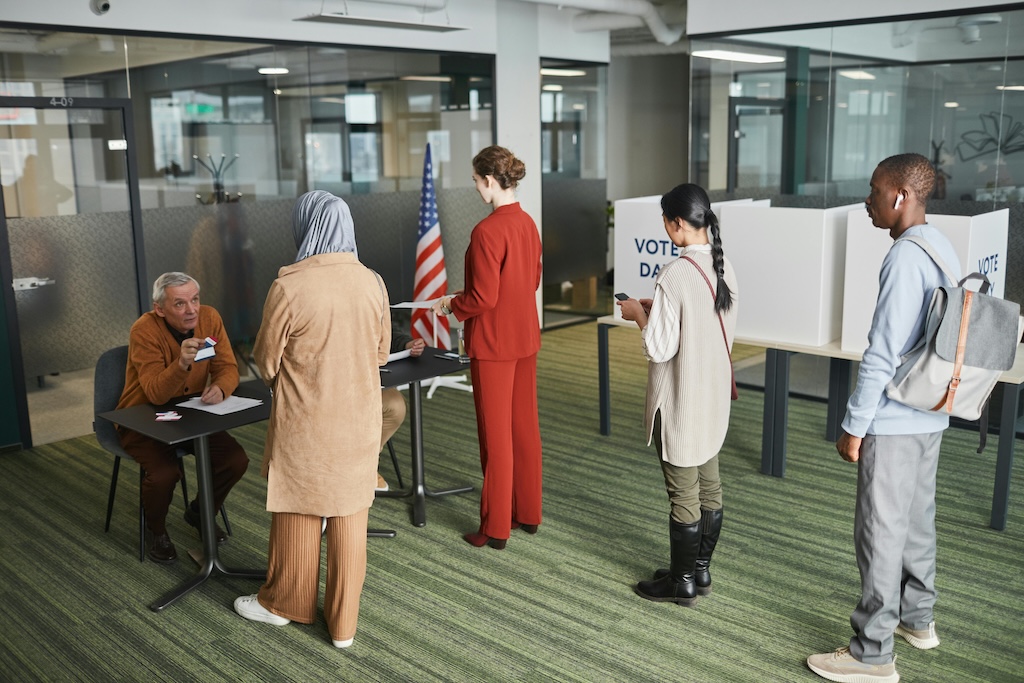
Polling access disparities continued in 2024. While national data for wait times is limited post-2020, studies from earlier cycles showed significant inequities: Black neighborhoods faced 29% longer lines and were 74% more likely to wait over 30 minutes than white areas. Anecdotal reports during the 2024 cycle suggest persistent long lines and closures in minority-populated precincts in Boston and Bridgeport.
Voting methods in 2024 further reflect systemic inequities. Nationwide, 39.6% of voters cast their ballots on Election Day, 30.7% early in person, and 29.0% voted by mail. Early and mail voting increased 12.7 percentage points since 2022—yet uptake varied significantly across regions, with New England lagging behind southern and western states in expanding pre-Election Day access.
Reform proposals include expanded language services, voter education, and greater representation of immigrants and minorities on election boards.
Some New England cities have adopted early voting, multilingual materials, and community outreach, but implementation remains inconsistent. While national early voting rose sharply, local disparities persist.
Fair election management is essential not only for access but also for trust, ensuring all residents, regardless of language or background, can fully participate in the democratic process.

Said Abdikarim is a visionary business and nonprofit leader with more than a decade of experience in strategic communications, public policy, and civic engagement. His work spans nonprofit, educational, and public-sector organizations, where he has led high-impact initiatives focused on narrative strategy, complex project management, and meaningful engagement with diverse communities and stakeholders.