

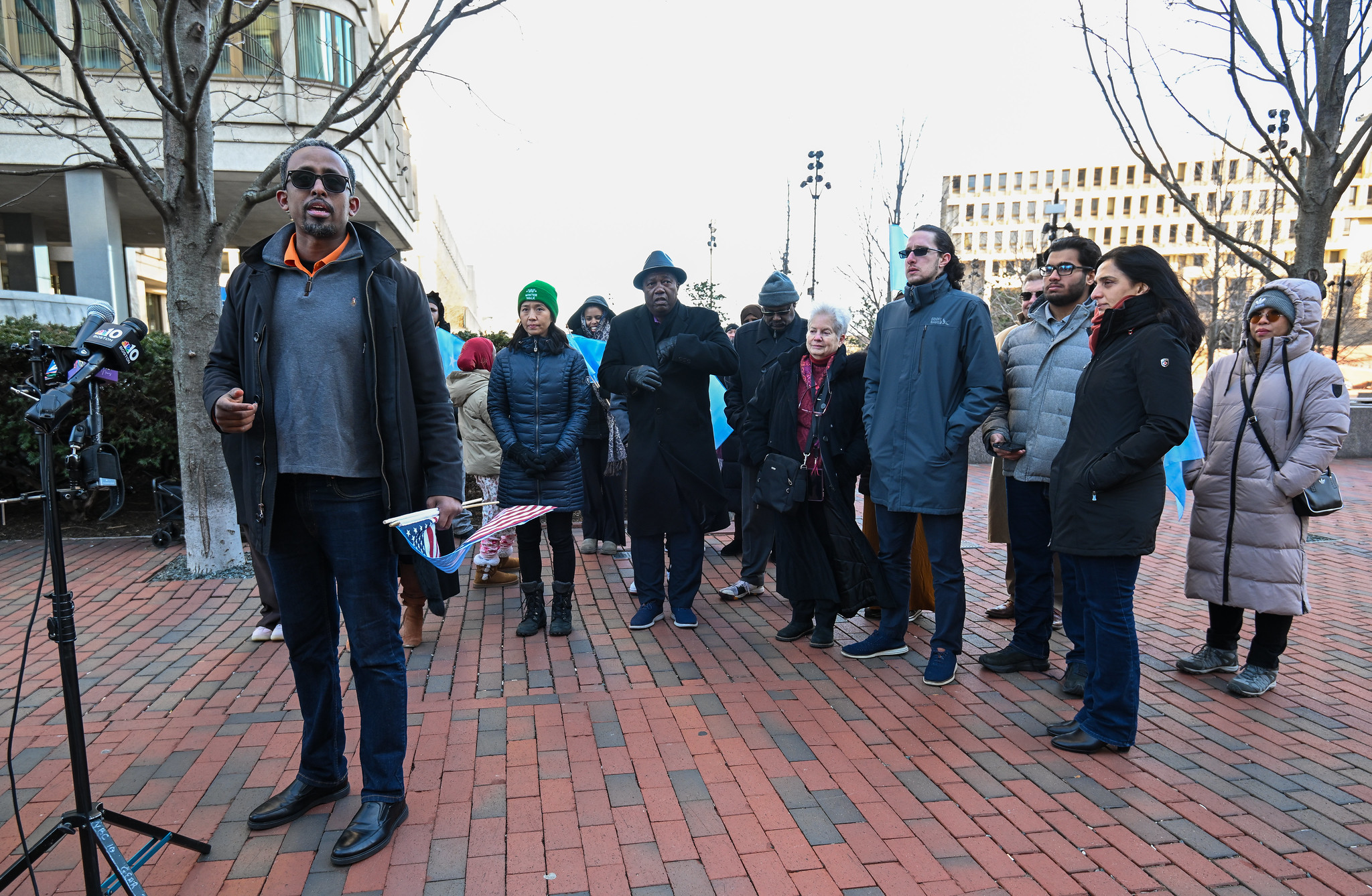
Across cities in New England, immigrants and communities of color are experiencing increased social exclusion amid a rise in dehumanizing political rhetoric, according to advocates and service providers working throughout the region.
From Boston and Worcester to Providence and Portland, recent public discourse has singled out Somali and Haitian immigrants using derogatory language, including terms such as “garbage.” Community leaders say such rhetoric goes beyond inflammatory speech, contributing to an environment that normalizes exclusion and influences public policy in ways that deepen social isolation and worsen public health outcomes for Black and Brown immigrants.
In Brockton and Mattapan, neighborhoods with large Haitian populations, residents report growing fear fueled by false narratives that portray immigrants as dangerous or undeserving of protection. Advocates say these portrayals reinforce long-standing patterns of anti-Blackness and xenophobia, creating a double standard in which non-white immigrants are framed as security threats rather than as contributors to their communities.
Somali communities in Lewiston, Maine, have reported similar impacts. Local leaders and health professionals note that harmful stereotypes amplified by political figures can legitimize hostility and heighten the risk of bias-motivated harm. Residents describe living under heightened scrutiny, a condition that undermines personal safety and contributes to chronic stress. Mental health providers say prolonged exposure to discrimination has led to increased emotional distress and feelings of displacement among Somali-American families.
The effects extend to organizations that serve immigrant communities. Migrant-Led Organizations (MLOs), which provide essential services such as healthcare navigation, housing assistance, and social support, report increased public distrust and funding challenges. Advocates say that when these organizations are delegitimized through hostile rhetoric, their ability to deliver care is compromised, leaving critical needs unmet and weakening trust in public institutions.
Service providers across New England have documented a decline in participation in essential public programs within immigrant-heavy neighborhoods. Families are increasingly avoiding healthcare and social services due to fears of discrimination, surveillance, or legal consequences. Experts warn that portraying communities as expendable can make it easier for state and local systems to justify underfunding resources intended to protect vulnerable populations.
Community leaders emphasize that addressing social equity in New England requires recognizing the tangible consequences of discriminatory rhetoric. They argue that language shapes policy, and policy determines access to safety, healthcare, and opportunity. While immigrant communities continue to demonstrate resilience, advocates say the region’s long-term stability depends on ensuring immigrants of color are treated as integral members of society rather than as marginalized outsiders.

Dr. Brian Omolo is an author and professional advisor dedicated to raising the voices of the different communities of New England. He is a PhD holder in Literature from Kenyatta University and a bachelor's degree holder in Pure Mathematics from the University of Nairobi, which justifies his combination of analytical clarity and creative insight.